
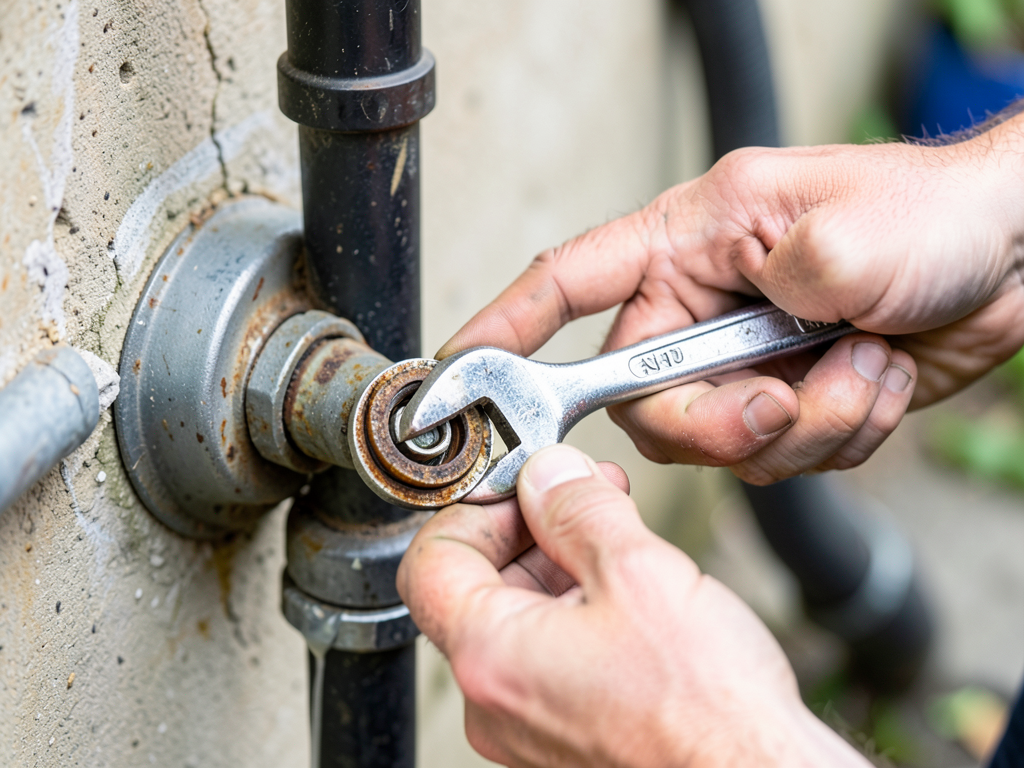
How to fix a leaking hose bib before the Virginia Beach winter hits
That steady drip from your outdoor faucet isn’t just annoying—it’s a warning sign that could turn into a Virginia Beach plumbing emergency when temperatures drop. Coastal Virginia’s humid summers and occasional hard freezes create the perfect conditions for hose bib failures. A small leak today can become a burst pipe tomorrow, flooding your crawl space with thousands of gallons of water before you even know there’s a problem. Virginia Uniform Statewide Building Code.
Virginia Beach homeowners face unique challenges with outdoor plumbing. Salt air accelerates corrosion on brass and copper fixtures, while our sandy soil can cause shifting that loosens connections. Add in the freeze-thaw cycles we get several times each winter, and that innocent drip becomes a ticking time bomb for water damage. Keep your Chic’s Beach basement dry with a new sump pump installation.
The good news? Many hose bib leaks can be fixed before winter hits with basic tools and about 30 minutes of your time. This guide walks you through identifying the type of leak, DIY repair steps for simple fixes, and when it’s time to call in a licensed Virginia Beach plumber before the first freeze hits.
Common hose bib leaks in Virginia Beach homes
Understanding what’s causing your leak determines whether you can fix it yourself or need professional help. Virginia Beach’s coastal environment creates specific failure patterns that differ from inland areas.
Stem packing leaks occur when the handle packing nut loosens or the washer inside deteriorates. You’ll notice water seeping around the handle when the faucet is turned on. This is the most common and easiest DIY fix.
Vacuum breaker failures show up as water spraying from the top cap when the faucet runs. Virginia Beach’s sand and salt can clog these anti-siphon devices, causing them to fail. The vacuum breaker prevents contaminated water from flowing back into your home’s supply.
Frost-proof sillcock issues are particularly problematic in older Virginia Beach neighborhoods like Chic’s Beach and North End. These units have a long stem that extends into your wall. When the washer at the end fails, water can leak inside your wall where you can’t see it—often the first sign is a high water bill or damp drywall.
Cracked bodies happen when water freezes inside the faucet. Virginia Beach typically sees 3-5 freeze events each winter, enough to cause damage if your hose bib isn’t properly drained. You’ll see water leaking from cracks in the casting itself.
Shut-off valve problems affect homes where the outdoor faucet connects to an interior shut-off valve. If this valve fails or was never installed correctly, you can’t isolate the leak without shutting off water to your entire house.
DIY hose bib repair: When you can fix it yourself
Many Virginia Beach homeowners successfully repair simple hose bib leaks themselves. Here’s when DIY makes sense and what tools you’ll need.
Safe for DIY: Handle leaks, vacuum breaker issues, and visible stem packing problems. These repairs cost $15-40 in parts and take 30-60 minutes.
Call a pro: Leaks inside walls, frozen pipes, cracked castings, or any repair requiring soldering. These situations often hide bigger problems that need professional diagnosis.
Tools needed: Adjustable wrench, screwdrivers, replacement washers (various sizes), plumber’s grease, Teflon tape, bucket, towels. Keep these in your garage—you’ll use them again for other plumbing repairs.
Safety first: Always turn off the water supply before disassembling any plumbing fixture. Virginia Beach homes typically have the main shut-off in the front yard near the water meter or inside near the water heater.
Step-by-step hose bib repair
Step 1: Diagnose the leak location
Turn on the faucet and watch where water appears. Handle leaks are obvious—water seeps around the handle stem. Vacuum breaker issues spray from the top cap. Internal leaks may require feeling along the pipe for moisture. Hard water solutions for Pungo properties using well water.
Step 2: Shut off the water supply
Locate your main water shut-off valve. In Virginia Beach, this is often in the front yard near the curb or in a utility closet. Turn the valve clockwise until it stops. Open a nearby faucet to relieve pressure.
Step 3: Remove the handle and packing nut
Unscrew the handle (usually a Phillips screw under a decorative cap). Remove the packing nut with an adjustable wrench. If it’s stuck, apply penetrating oil and wait 10 minutes.
Step 4: Replace the stem washer
Pull out the stem assembly. The washer is at the end—it’s often hardened or cracked from Virginia Beach’s mineral-rich water. Replace it with an exact match from your hardware store. ASSE 1011 certified vacuum breakers.
Step 5: Reassemble with new packing
Replace the stem packing (looks like string or a rubber ring). Apply plumber’s grease to all moving parts. Reassemble in reverse order, tightening the packing nut just until the leak stops—over-tightening damages the new washer.
Step 6: Test and monitor
Turn the water back on slowly. Check for leaks at all connection points. Let the faucet run for 5 minutes while watching for any drips or spraying.
Virginia Beach winterization timeline
Timing matters in coastal Virginia. Our first freeze typically hits between November 15-30, but weather patterns have become less predictable. Here’s your local winterization schedule:
October 1-15: Inspect all outdoor faucets for leaks. Virginia Beach’s humid summer can cause corrosion you didn’t notice during active use.
October 15-31: Complete all repairs. Parts stores get busy as temperatures drop, and waiting until the last minute means longer repair times.
November 1-15: Drain and insulate. Remove hoses, drain remaining water, and install faucet covers. Virginia Beach hardware stores sell insulated covers specifically designed for our climate.
November 15-30: Monitor weather forecasts. When temperatures dip below 32°F, take extra precautions with vulnerable pipes.
December-February: During cold snaps, let indoor faucets drip slightly and open cabinet doors to allow warm air circulation around pipes.
When to call a Virginia Beach plumber
Professional help isn’t just for emergencies. Knowing when to call saves you money and prevents bigger problems.
Wall leaks indicate the problem is inside your home’s structure. A Virginia Beach plumber can use moisture meters to locate hidden leaks without tearing open walls unnecessarily.
Frozen pipes require immediate professional attention. Attempting to thaw pipes yourself often causes more damage. A licensed plumber knows how to safely restore water flow without causing bursts.
Old galvanized pipes common in Virginia Beach homes built before 1970 can’t be repaired with simple washer replacement. These pipes often need complete replacement to meet current Virginia Uniform Statewide Building Code requirements.
Backflow preventer issues involve your home’s drinking water supply. Virginia Beach requires ASSE 1011 certified vacuum breakers on all outdoor faucets to prevent contamination.
Main water line problems affect water pressure throughout your house. If multiple fixtures have low pressure or your water bill spikes unexpectedly, you may have a main line leak.
Cost factors for hose bib repair in Virginia Beach
Understanding what drives repair costs helps you budget and avoid surprises. Virginia Beach plumbing rates vary based on several factors. Plumbing Newport News.
DIY parts cost: $15-40 for basic repairs (washers, packing, vacuum breaker). Most hardware stores in Virginia Beach stock common replacement parts.
Professional repair: $150-350 for standard fixes, including parts and labor. This covers diagnosis, repair, and testing.
Emergency service: $250-450 after hours or weekends. Virginia Beach plumbers charge premium rates for immediate response during freezing weather.
Replacement costs: $300-600 for new frost-proof sillcock installation, including cutting into walls if needed. Older Virginia Beach homes often require this upgrade.
Factors affecting price: Accessibility (crawl space vs. finished basement), pipe material (copper vs. PEX), need for wall repair, and whether your home is in a historic district with special requirements.
Preventing future hose bib problems
Once you’ve fixed your leak, take steps to prevent future issues. Virginia Beach’s climate creates specific challenges that require ongoing maintenance.
Annual inspection schedule: Check your outdoor faucets every spring and fall. Look for green corrosion (copper oxidation), white deposits (mineral buildup), or rust stains that indicate slow leaks.
Water quality matters: Virginia Beach’s water contains minerals that can accelerate washer deterioration. Installing a whole-house water softener can extend the life of all your plumbing fixtures.
Proper drainage: Ensure your hose bib drains completely when shut off. Frost-proof models are designed to drain to prevent freezing, but debris can block this function.
Winter preparation: Beyond just covering faucets, disconnect and drain garden hoses. Water trapped in hoses can back up into the faucet and cause freezing.
Upgrade considerations: If your home is over 20 years old, consider upgrading to modern frost-proof sillcocks with built-in vacuum breakers. This single upgrade prevents most common outdoor faucet problems.
Local building codes and requirements
Virginia Beach follows the Virginia Uniform Statewide Building Code, which includes specific requirements for outdoor plumbing fixtures. Commercial Plumbing Contractors.
ASSE 1011 compliance: All outdoor hose bibs must have ASSE 1011 certified vacuum breakers to prevent backflow contamination. This is non-negotiable for both new installations and replacements.
Frost-proof requirements: While not mandatory for all installations, frost-proof sillcocks are strongly recommended for Virginia Beach’s climate. They must extend at least 4 inches into the wall to provide adequate freeze protection.
Shut-off valve access: Building code requires accessible shut-off valves for all outdoor fixtures. If your home lacks these, a plumber can add them during repair work.
Permit requirements: Major plumbing changes typically require permits from the City of Virginia Beach. Simple washer replacements don’t need permits, but wall penetrations or pipe replacements do.
Water conservation: Virginia Beach encourages water-efficient fixtures. Modern hose bibs often include flow restrictors that reduce water waste while maintaining adequate pressure.
Frequently Asked Questions
How much does it cost to replace an outdoor spigot in Virginia Beach?
Professional replacement of a standard outdoor spigot in Virginia Beach typically costs $300-600, including parts and labor. This assumes accessible plumbing and no wall repairs needed. Frost-proof models or installations requiring wall modifications can cost $500-900.
Why is my outdoor faucet still leaking after I replaced the washer?
If the leak persists after washer replacement, you likely have a damaged valve seat, corroded stem, or the wrong washer size. Virginia Beach’s mineral-rich water can also cause washers to deteriorate faster. A professional diagnosis with proper tools can identify the exact cause.
Can I use my outdoor faucet in winter if I have a freeze-proof model?
Even freeze-proof models need winterization. Always disconnect hoses and drain the faucet completely. Virginia Beach typically sees enough freeze-thaw cycles to potentially damage any outdoor plumbing if not properly maintained. Drain Cleaning & Rooter Service.
How do I know if my vacuum breaker needs replacement?
Signs of vacuum breaker failure include water spraying from the top cap when the faucet runs, difficulty turning the handle, or visible corrosion on the cap. Virginia Beach’s salt air accelerates this wear, so annual inspection is recommended.
What’s the difference between a hose bib and a sillcock?
A hose bib is any outdoor faucet, while a sillcock is a frost-proof hose bib with a long stem that extends into your wall. Most Virginia Beach homes built after 1980 have sillcocks, which provide better freeze protection than standard hose bibs.
Take action before the next freeze
Virginia Beach’s winter weather waits for no one. That small drip you’ve been ignoring could become a major flood when temperatures drop. Whether you tackle the repair yourself or call in a professional, addressing hose bib leaks before winter hits protects your home and your wallet.
DIY repairs work well for simple leaks, but know your limits. If you’re dealing with wall leaks, frozen pipes, or old galvanized plumbing, professional help ensures the job is done right the first time.
Don’t wait until the first freeze warning to discover your outdoor faucet has failed. Pick up the phone and call (948) 207-0600 today to schedule your Virginia Beach plumbing inspection. Our licensed plumbers can diagnose problems, make repairs, and ensure your home is ready for whatever winter brings to coastal Virginia.
Remember: A small investment now prevents costly water damage later. Your home—and your peace of mind—are worth protecting.
{
“@context”: “https://schema.org”,
“@type”: “BlogPosting”,
“headline”: “How to fix a leaking hose bib before the Virginia Beach winter hits”,
“description”: “Don’t let a dripping outdoor faucet ruin your Virginia Beach winter. Learn how to repair your hose bib before freezing temps cause costly pipe bursts.”,
“wordCount”: 2023,
“datePublished”: “2026-03-20T15:00:00.000Z”,
“dateModified”: “2026-03-20T15:00:00.000Z”,
“inLanguage”: “en-US”,
“mainEntityOfPage”: {
“@type”: “WebPage”,
“@id”: “https://libertyplumbingvirginiabeach.com”
},
“publisher”: {
“@type”: “LocalBusiness”,
“name”: “Liberty Plumbing Virginia Beach”,
“url”: “https://libertyplumbingvirginiabeach.com”
},
“author”: {
“@type”: “Organization”,
“name”: “Liberty Plumbing Virginia Beach”,
“url”: “https://libertyplumbingvirginiabeach.com”
},
“image”: {
“@type”: “ImageObject”,
“url”: “https://libertyplumbingvirginiabeach.com/wp-content/uploads/2026/03/how-to-fix-a-leaking-hose-bib-before-the-virginia-1.png”
}
}
{
“@context”: “https://schema.org”,
“@type”: “Plumber”,
“name”: “Liberty Plumbing Virginia Beach”,
“url”: “https://libertyplumbingvirginiabeach.com”,
“address”: {
“@type”: “PostalAddress”,
“addressLocality”: “Virginia Beach”
},
“areaServed”: {
“@type”: “City”,
“name”: “Virginia Beach”
}
}
{
“@context”: “https://schema.org”,
“@type”: “FAQPage”,
“mainEntity”: [
{
“@type”: “Question”,
“name”: “How much does it cost to replace an outdoor spigot in Virginia Beach?”,
“acceptedAnswer”: {
“@type”: “Answer”,
“text”: “Professional replacement of a standard outdoor spigot in Virginia Beach typically costs $300-600, including parts and labor. This assumes accessible plumbing and no wall repairs needed. Frost-proof models or installations requiring wall modifications can cost $500-900.”
}
},
{
“@type”: “Question”,
“name”: “Why is my outdoor faucet still leaking after I replaced the washer?”,
“acceptedAnswer”: {
“@type”: “Answer”,
“text”: “If the leak persists after washer replacement, you likely have a damaged valve seat, corroded stem, or the wrong washer size. Virginia Beach’s mineral-rich water can also cause washers to deteriorate faster. A professional diagnosis with proper tools can identify the exact cause.”
}
},
{
“@type”: “Question”,
“name”: “Can I use my outdoor faucet in winter if I have a freeze-proof model?”,
“acceptedAnswer”: {
“@type”: “Answer”,
“text”: “Even freeze-proof models need winterization. Always disconnect hoses and drain the faucet completely. Virginia Beach typically sees enough freeze-thaw cycles to potentially damage any outdoor plumbing if not properly maintained. Drain Cleaning & Rooter Service.”
}
},
{
“@type”: “Question”,
“name”: “How do I know if my vacuum breaker needs replacement?”,
“acceptedAnswer”: {
“@type”: “Answer”,
“text”: “Signs of vacuum breaker failure include water spraying from the top cap when the faucet runs, difficulty turning the handle, or visible corrosion on the cap. Virginia Beach’s salt air accelerates this wear, so annual inspection is recommended.”
}
},
{
“@type”: “Question”,
“name”: “What’s the difference between a hose bib and a sillcock?”,
“acceptedAnswer”: {
“@type”: “Answer”,
“text”: “A hose bib is any outdoor faucet, while a sillcock is a frost-proof hose bib with a long stem that extends into your wall. Most Virginia Beach homes built after 1980 have sillcocks, which provide better freeze protection than standard hose bibs.”
}
}
]
}
{
“@context”: “https://schema.org”,
“@type”: “BreadcrumbList”,
“itemListElement”: [
{
“@type”: “ListItem”,
“position”: 1,
“name”: “Home”,
“item”: “https://libertyplumbingvirginiabeach.com”
},
{
“@type”: “ListItem”,
“position”: 2,
“name”: “Blog”,
“item”: “https://libertyplumbingvirginiabeach.com/blog”
},
{
“@type”: “ListItem”,
“position”: 3,
“name”: “How to fix a leaking hose bib before the Virginia Beach winter hits”
}
]
}
{
“@context”: “https://schema.org”,
“@type”: “Service”,
“serviceType”: “Plumbing”,
“provider”: {
“@type”: “LocalBusiness”,
“name”: “Liberty Plumbing Virginia Beach”,
“url”: “https://libertyplumbingvirginiabeach.com”
},
“areaServed”: {
“@type”: “City”,
“name”: “Virginia Beach”
},
“description”: “Don’t let a dripping outdoor faucet ruin your Virginia Beach winter. Learn how to repair your hose bib before freezing temps cause costly pipe bursts.”
}