
Deciding Between a Water Softener and a Water Conditioner for Your Ashville Park Home
If you’re noticing white crusty buildup on faucets, spotty dishes, or dry skin after showers in your Ashville Park home, you’re likely dealing with hard water. The good news is you have two main options to fix it: a traditional water softener or a salt-free water conditioner. Both systems tackle mineral problems, but they work in completely different ways and come with different trade-offs. Hard water solutions for Pungo properties using well water.
The first 100 words answer the big question: Choose a water softener if you want to remove hard minerals completely and protect your plumbing from scale buildup. Choose a salt-free water conditioner if you want to prevent scale without adding sodium to your water and prefer low maintenance. Your choice depends on your water hardness level, budget, and personal preferences. Virginia Beach’s municipal water typically tests at 7-10 grains per gallon, which is moderately hard and can benefit from either system depending on your priorities.
Ashville Park, located in the heart of Virginia Beach near the Princess Anne Plaza area, sits in a region where the water supply comes primarily from the city’s treatment plants drawing from Lake Gaston. This water source naturally contains calcium and magnesium minerals that cause hardness. Understanding how each system handles these minerals is key to making the right decision for your home. Virginia Beach 2024 Water Quality Report.
How Traditional Water Softeners Work
Traditional water softeners use a process called ion exchange. Inside the softener tank, resin beads attract and hold onto calcium and magnesium ions, swapping them for sodium or potassium ions. This exchange removes the hard minerals from your water supply entirely, replacing them with softer minerals that won’t cause scale buildup.
The ion exchange process happens continuously as water flows through the softener. When the resin beads become saturated with hard minerals, the system automatically regenerates using a brine solution. During regeneration, the softener flushes the collected minerals down the drain and recharges the resin beads with fresh sodium or potassium ions. Drain Cleaning & Rooter Service.
Water softeners provide several key benefits for Ashville Park homeowners. You’ll notice cleaner dishes without spots, softer skin and hair after bathing, and longer-lasting appliances since scale buildup won’t form inside water heaters, dishwashers, and washing machines. The system also helps prevent soap scum in showers and reduces the need for harsh cleaning chemicals.
However, traditional softeners require regular maintenance. You’ll need to add salt or potassium pellets to the brine tank every few weeks, depending on your household water usage. The system also uses water during the regeneration cycle, which can increase your water bill slightly. Additionally, the brine discharge from regeneration must comply with local regulations.
How Salt-Free Water Conditioners Work
Salt-free water conditioners, also called water conditioners or descalers, use a different approach called Template Assisted Crystallization (TAC). Instead of removing hard minerals, these systems change the structure of calcium and magnesium so they can’t stick to surfaces and form scale.
The TAC media inside the conditioner contains tiny polymer beads with nucleation sites. As hard water passes through, the minerals attach to these sites and crystallize into microscopic particles that remain suspended in the water. These crystals can’t adhere to pipes, fixtures, or appliances, effectively preventing scale buildup without removing the minerals entirely.
Salt-free conditioners offer several advantages for Virginia Beach homes. They require no salt, produce no wastewater during operation, and need minimal maintenance beyond annual filter changes. The systems are also more environmentally friendly since they don’t discharge brine into the municipal sewer system. Installation is typically simpler since there’s no need for drain connections or electrical outlets. Keep your Chic’s Beach basement dry with a new sump pump installation.
The main limitation is that salt-free conditioners don’t actually soften water. You’ll still have the same mineral content, so you won’t see the same benefits for skin, hair, or soap lathering that you get with traditional softeners. The systems also work best with water hardness levels below 15-20 grains per gallon, which covers most of Virginia Beach but may be less effective in areas with extremely hard water.
Virginia Beach Water Hardness: What You Need to Know
According to the 2024 Virginia Beach Water Quality Report, the city’s municipal water supply averages between 7-10 grains per gallon of hardness, with some areas testing slightly higher or lower. This puts most of Ashville Park in the moderately hard water category, where both softeners and conditioners can be effective.
The hardness levels can vary slightly depending on your specific location within Ashville Park and the time of year. Water from Lake Gaston naturally contains more minerals during certain seasons, and the city’s treatment process can affect the final hardness levels in your home. Testing your water directly is the best way to determine your exact hardness level.
For homes in the Ashville Park area, the moderately hard water means you have flexibility in your choice. At 7-10 GPG, a traditional softener will provide excellent results for scale prevention and soap efficiency. A salt-free conditioner will also work well for preventing scale buildup in pipes and appliances, though you won’t get the same soap and skin benefits.
The Virginia Beach Department of Public Utilities follows all EPA guidelines for water treatment and quality. Their annual reports show consistent hardness levels across the city, with no significant variations between different neighborhoods. This consistency makes it easier to recommend appropriate treatment solutions for Ashville Park residents. Why Great Neck residents trust our team for trenchless sewer line repairs.
Cost Comparison: Installation and Long-Term Maintenance
Initial installation costs for water treatment systems in Virginia Beach typically range from $1,500 to $3,500 for traditional softeners and $1,200 to $2,500 for salt-free conditioners. The price difference reflects the more complex plumbing and electrical requirements for softeners, which need drain connections and power for the control valve. Plumbing Newport News.
Traditional softeners have ongoing costs that salt-free systems don’t. You’ll need to purchase salt or potassium pellets regularly, typically spending $5-15 per month depending on your water usage and the type of salt you choose. The system also uses water during regeneration, which can add $3-8 to your monthly water bill.
Salt-free conditioners have much lower operating costs. The main expense is replacing the TAC media every 3-5 years, which costs $150-300. There’s no salt to buy, no water wasted during operation, and no electricity needed for most models. The annual maintenance involves simply changing a sediment pre-filter, which costs about $30-50.
Both systems typically last 10-15 years with proper maintenance. Traditional softeners may need more frequent service calls for valve repairs or resin bed replacement. Salt-free conditioners generally have fewer moving parts and lower failure rates, though the media does eventually need replacement.
Installation Requirements and Local Regulations
Installing a water softener in Virginia Beach requires compliance with the Virginia Uniform Statewide Building Code (USBC) and local plumbing ordinances. The system must be installed by a licensed plumber, and you’ll need to obtain the proper permits before installation begins. The permit process ensures the system meets all local code requirements.
Salt-based softeners must comply with HRSD (Hampton Roads Sanitation District) regulations regarding brine discharge. The discharge cannot create hazardous conditions in the municipal sewer system, and the installation must include proper air gaps and backflow prevention devices. Some older homes may need plumbing modifications to accommodate these requirements. Hampton Roads Sanitation District regulations.
Salt-free conditioners have fewer regulatory hurdles since they don’t discharge brine. However, they still require proper installation to maintain water pressure and prevent contamination. The Virginia Department of Health requires all water treatment systems to be installed in a way that prevents cross-connection with potable water supplies.
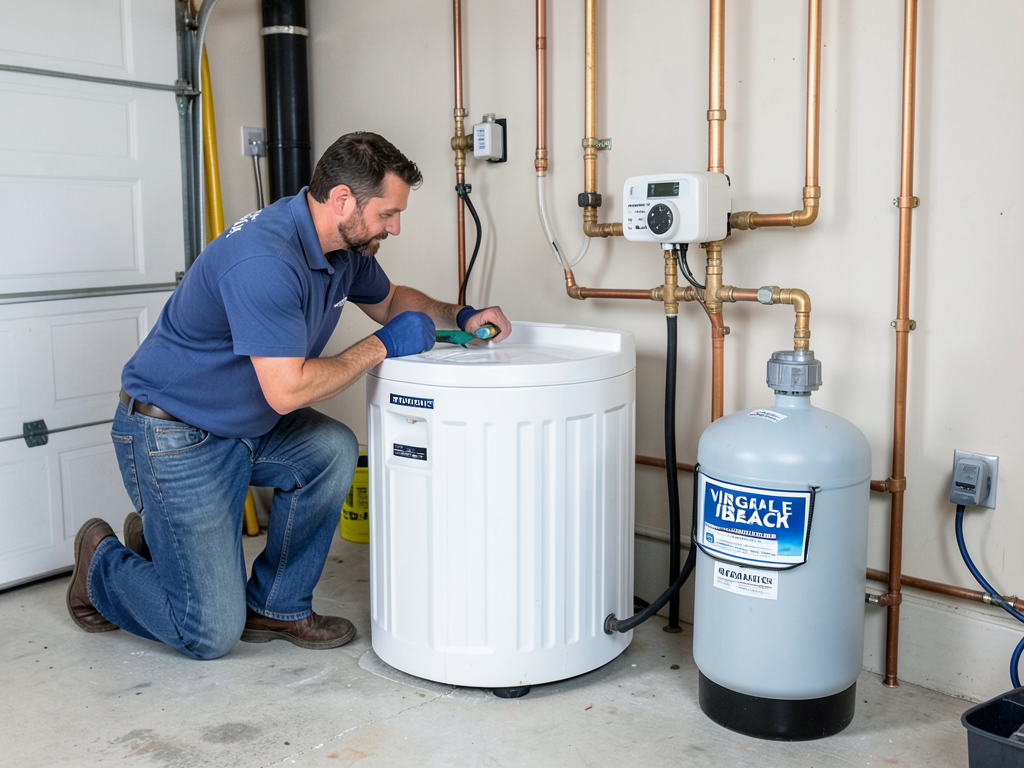
For Ashville Park homes, the installation location is important. Most systems go in the garage, basement, or utility closet near the main water line entry point. The space needs to accommodate the unit size, provide access for maintenance, and have proper drainage for softeners. Coastal humidity in Virginia Beach means you’ll want to ensure the installation area stays dry and well-ventilated.
Impact on Appliances and Plumbing
Hard water affects every water-using appliance in your home. In traditional water heaters, scale buildup insulates the heating elements, forcing the unit to work harder and reducing efficiency by up to 30%. This means higher energy bills and shorter appliance lifespan. Tankless water heaters are especially vulnerable since scale can quickly clog the heat exchanger.
Traditional water softeners completely eliminate scale formation by removing the minerals before they can cause problems. This protection extends to dishwashers, washing machines, coffee makers, and ice makers. You’ll notice cleaner dishes, brighter laundry, and fewer appliance repairs over time. The softener also prevents scale from building up inside your home’s plumbing pipes.
Salt-free conditioners prevent new scale from forming but won’t remove existing buildup. If your home already has scale in the pipes, a conditioner will stop it from getting worse but won’t clean out what’s already there. The systems are particularly effective at preventing scale in tankless water heaters and on fixtures like showerheads and faucets.
For Ashville Park residents with newer homes, preventing scale buildup from the start can save thousands in potential repairs. For older homes with existing scale, a traditional softener might be better since it can gradually dissolve some of the accumulated mineral deposits over time.
Environmental and Health Considerations
Traditional water softeners discharge brine during regeneration, which contains concentrated sodium or potassium. This discharge goes into the municipal sewer system and eventually to HRSD treatment facilities. While the treatment plants can handle this discharge, some environmental groups have concerns about the cumulative impact on local waterways.
The sodium added to your water by traditional softeners is minimal – about 12.5 milligrams per 8-ounce glass for every grain of hardness removed. For most healthy adults, this amount is negligible compared to dietary sodium intake. However, people on sodium-restricted diets or with certain health conditions may want to consider potassium-based systems or salt-free alternatives.
Salt-free conditioners have a much smaller environmental footprint. They use no electricity, produce no wastewater, and don’t add anything to your water supply. The TAC media is also more environmentally friendly to manufacture and dispose of compared to the resin used in traditional softeners.
For Ashville Park residents concerned about environmental impact, the choice often comes down to weighing the benefits of completely soft water against the desire to minimize salt discharge. Some homeowners choose to install softeners with demand-initiated regeneration, which only regenerates when needed rather than on a fixed schedule, reducing water and salt usage.
Making Your Decision: Which System is Right for You?
Consider a traditional water softener if you want the complete benefits of soft water – better soap lathering, softer skin and hair, spotless dishes, and maximum protection for your appliances. Choose this option if you have very hard water (above 10 GPG), want to eliminate existing scale buildup, or prefer the traditional feel of completely soft water.
Choose a salt-free water conditioner if you want to prevent scale without adding sodium to your water, prefer minimal maintenance, or are concerned about environmental impact. This option works well if you have moderately hard water (7-10 GPG), already have a healthy diet low in sodium, or want to protect your plumbing without changing your water’s mineral content.
For most Ashville Park homes with 7-10 GPG hardness, either system will work effectively. The traditional softener provides more comprehensive benefits but requires more maintenance and ongoing costs. The salt-free conditioner offers simplicity and environmental benefits but won’t give you the same soap and skin improvements.
Your household priorities should guide your decision. If you value the luxurious feel of soft water and want maximum appliance protection, a traditional softener is probably worth the extra maintenance. If you prefer a set-it-and-forget-it solution with minimal environmental impact, a salt-free conditioner might be your best choice.
Professional Installation and Service
Proper installation is crucial for both types of water treatment systems. A licensed plumber will ensure the system is sized correctly for your home’s water usage, installed according to local codes, and configured for optimal performance. Professional installation also includes water testing to determine your exact hardness level and recommend the appropriate system size.
Liberty Plumbing has been serving Virginia Beach homeowners since 2005, with extensive experience installing both traditional softeners and salt-free conditioners in the Ashville Park area. Our technicians understand the local water conditions and can recommend the best solution based on your specific needs and budget.
Professional service includes initial water testing, proper system sizing, code-compliant installation, and ongoing maintenance support. We also provide education on how to operate your system and what to expect in terms of performance and maintenance requirements.
Whether you choose a traditional softener or a salt-free conditioner, professional installation ensures your system works correctly from day one and provides years of reliable service. Don’t risk improper installation that could lead to leaks, poor performance, or code violations.
Next Steps for Ashville Park Homeowners
The first step in deciding between a water softener and a water conditioner is to test your water’s hardness level. This simple test, which can be done by a professional plumber, will tell you exactly how hard your water is and help determine which system will work best for your home.
Consider your household’s specific needs and priorities. Do you have family members with sensitive skin who might benefit from completely soft water? Are you concerned about environmental impact or sodium intake? Do you prefer minimal maintenance or don’t mind adding salt periodically? These factors will help guide your decision.
Budget is another important consideration. While salt-free conditioners have lower operating costs, traditional softeners often provide more comprehensive benefits. Think about the long-term costs of each option, including maintenance, salt or media replacement, and potential energy savings from more efficient appliances.
Finally, consult with a local plumbing professional who understands Virginia Beach’s water conditions and can recommend the best solution for your specific situation. The right system for your neighbor might not be the best choice for your home.
Frequently Asked Questions
How do I know if I need a water softener or conditioner?
Look for signs like white crusty buildup on faucets, spotty dishes, dry skin after showers, or reduced soap lathering. A water test will confirm your hardness level, which typically ranges from 7-10 GPG in Ashville Park. Either system can work well at this level, depending on your preferences.
Can I install a water softener or conditioner myself?
While DIY installation is possible, professional installation is recommended to ensure proper sizing, code compliance, and optimal performance. Virginia Beach requires permits for water treatment system installation, and improper installation can lead to leaks, poor performance, or code violations.
How long do water softeners and conditioners last?
Both systems typically last 10-15 years with proper maintenance. Traditional softeners may need more frequent service for valve repairs or resin replacement. Salt-free conditioners generally have fewer moving parts and lower failure rates, though the TAC media needs replacement every 3-5 years.
Ready to Solve Your Hard Water Problems?
Don’t let hard water damage your appliances, dry out your skin, or leave spots on your dishes. Whether you choose a traditional water softener or a salt-free water conditioner, the expert team at Liberty Plumbing is here to help. We’ll test your water, explain your options, and install the perfect system for your Ashville Park home.
Call (948) 207-0600 today to schedule your water hardness test and consultation. Our licensed plumbers will help you understand your options and recommend the best solution for your home, budget, and lifestyle. Stop dealing with hard water problems and start enjoying the benefits of properly treated water.
Pick up the phone and call (948) 207-0600 before the next scale buildup ruins another appliance. Your skin, your dishes, and your plumbing will thank you.
You may also find this helpful. Why Your Kitchen Sink Sprayer Keeps Sticking (And How to Fix It Once and For All).
{
“@context”: “https://schema.org”,
“@type”: “BlogPosting”,
“headline”: “Deciding Between a Water Softener and a Water Conditioner for Your Ashville Park Home”,
“description”: “Compare water softeners vs conditioners for Ashville Park homes. Learn about ion exchange, salt-free systems, local water hardness, and costs. Call (948) 207-0600 for expert advice.”,
“wordCount”: 2654,
“datePublished”: “2026-04-25T08:24:00.000Z”,
“dateModified”: “2026-04-25T08:24:00.000Z”,
“inLanguage”: “en-US”,
“mainEntityOfPage”: {
“@type”: “WebPage”,
“@id”: “https://libertyplumbingvirginiabeach.com”
},
“publisher”: {
“@type”: “LocalBusiness”,
“name”: “Liberty Plumbing Virginia Beach”,
“url”: “https://libertyplumbingvirginiabeach.com”
},
“author”: {
“@type”: “Organization”,
“name”: “Liberty Plumbing Virginia Beach”,
“url”: “https://libertyplumbingvirginiabeach.com”
},
“image”: {
“@type”: “ImageObject”,
“url”: “https://libertyplumbingvirginiabeach.com/wp-content/uploads/2026/03/deciding-between-a-water-softener-and-a-water-cond-1.png”
}
}
{
“@context”: “https://schema.org”,
“@type”: “Plumber”,
“name”: “Liberty Plumbing Virginia Beach”,
“url”: “https://libertyplumbingvirginiabeach.com”,
“address”: {
“@type”: “PostalAddress”,
“addressLocality”: “Virginia Beach”
},
“areaServed”: {
“@type”: “City”,
“name”: “Virginia Beach”
}
}
{
“@context”: “https://schema.org”,
“@type”: “FAQPage”,
“mainEntity”: [
{
“@type”: “Question”,
“name”: “Making Your Decision: Which System is Right for You?”,
“acceptedAnswer”: {
“@type”: “Answer”,
“text”: “Consider a traditional water softener if you want the complete benefits of soft water – better soap lathering, softer skin and hair, spotless dishes, and maximum protection for your appliances. Choose this option if you have very hard water (above 10 GPG), want to eliminate existing scale buildup, or prefer the traditional feel of completely soft water.”
}
},
{
“@type”: “Question”,
“name”: “Can I install a water softener or conditioner myself?”,
“acceptedAnswer”: {
“@type”: “Answer”,
“text”: “While DIY installation is possible, professional installation is recommended to ensure proper sizing, code compliance, and optimal performance. Virginia Beach requires permits for water treatment system installation, and improper installation can lead to leaks, poor performance, or code violations.”
}
},
{
“@type”: “Question”,
“name”: “How long do water softeners and conditioners last?”,
“acceptedAnswer”: {
“@type”: “Answer”,
“text”: “Both systems typically last 10-15 years with proper maintenance. Traditional softeners may need more frequent service for valve repairs or resin replacement. Salt-free conditioners generally have fewer moving parts and lower failure rates, though the TAC media needs replacement every 3-5 years.”
}
},
{
“@type”: “Question”,
“name”: “Ready to Solve Your Hard Water Problems?”,
“acceptedAnswer”: {
“@type”: “Answer”,
“text”: “Don’t let hard water damage your appliances, dry out your skin, or leave spots on your dishes. Whether you choose a traditional water softener or a salt-free water conditioner, the expert team at Liberty Plumbing is here to help. We’ll test your water, explain your options, and install the perfect system for your Ashville Park home.”
}
}
]
}
{
“@context”: “https://schema.org”,
“@type”: “BreadcrumbList”,
“itemListElement”: [
{
“@type”: “ListItem”,
“position”: 1,
“name”: “Home”,
“item”: “https://libertyplumbingvirginiabeach.com”
},
{
“@type”: “ListItem”,
“position”: 2,
“name”: “Blog”,
“item”: “https://libertyplumbingvirginiabeach.com/blog”
},
{
“@type”: “ListItem”,
“position”: 3,
“name”: “Deciding Between a Water Softener and a Water Conditioner for Your Ashville Park Home”
}
]
}
{
“@context”: “https://schema.org”,
“@type”: “Service”,
“serviceType”: “Plumbing”,
“provider”: {
“@type”: “LocalBusiness”,
“name”: “Liberty Plumbing Virginia Beach”,
“url”: “https://libertyplumbingvirginiabeach.com”
},
“areaServed”: {
“@type”: “City”,
“name”: “Virginia Beach”
},
“description”: “Compare water softeners vs conditioners for Ashville Park homes. Learn about ion exchange, salt-free systems, local water hardness, and costs. Call (948) 207-0600 for expert advice.”
}