
Finding and Fixing Hidden Pool Heater Plumbing Leaks in Pocahontas Village
Pool heater plumbing leaks in Pocahontas Village homes can cause serious damage if left undetected. Virginia Beach’s coastal climate creates unique challenges for pool systems, from salt air corrosion to fluctuating water pressure. When you notice your pool heater running longer than usual or water pooling around the equipment pad, you need immediate professional diagnosis before the problem escalates. Virginia Uniform Statewide Building Code.
Liberty Plumbing specializes in finding and repairing hidden pool heater plumbing leaks throughout Pocahontas Village. Our licensed technicians understand the specific pressure requirements and plumbing configurations needed for Hayward, Pentair, Jandy, and Raypak systems common in Virginia Beach area pools. We don’t just patch visible leaks—we perform comprehensive pressure testing to locate the exact source of water loss, whether it’s in the heater manifold, flow sensor lines, or underground connections. EPA water conservation guidelines.
Pool heater leaks often start small but can waste hundreds of gallons of water monthly while damaging expensive equipment. The humid Pocahontas Village environment accelerates corrosion on exposed fittings and connections. Our team uses specialized leak detection equipment to pinpoint problems without unnecessary excavation or replacement of good parts. We then provide clear repair options with upfront pricing, so you know exactly what to expect before any work begins. Hard water solutions for Pungo properties using well water.
Call (948) 207-0600 today to schedule your pool heater plumbing inspection. Early detection saves you money on water bills and prevents costly equipment damage. Our Pocahontas Village service area includes zip codes 23462, 23455, and surrounding neighborhoods near Lake Lawson and the Lynnhaven River corridor. Plumbing Newport News.
Common Signs of Pool Heater Plumbing Leaks
Pool heater plumbing leaks often develop gradually, making them difficult to detect until significant damage occurs. Understanding the warning signs helps you catch problems early when repairs are simpler and less expensive.
Water pressure fluctuations in your pool system indicate potential plumbing leaks. When you notice inconsistent flow from return jets or the pump struggles to maintain prime, hidden leaks may be allowing air into the system or water to escape underground. The Pocahontas Village area’s sandy soil conditions can mask small leaks until they become major problems.
Unusual noises from your pool heater provide another diagnostic clue. A hissing sound near pipe connections often indicates escaping water or steam from a cracked manifold. Gurgling noises suggest air entering through a leak, while clicking sounds from pressure switches may indicate flow problems caused by restricted pipes.
Increased chemical usage signals potential leaks. When pool chemicals disappear faster than normal, water loss through leaks forces you to add more chemicals to maintain proper balance. This creates a cycle where you’re constantly adjusting levels while the underlying leak continues to worsen.
Visual inspection reveals many leak sources. Look for mineral deposits on pipes, which indicate slow leaks where water evaporates and leaves behind calcium or salt residue. Green or brown staining around connections suggests corrosion from prolonged moisture exposure. Pool equipment pads with standing water, even small puddles, require immediate attention.
Higher utility bills often accompany pool leaks. When your water meter shows usage increases without corresponding pool activity, underground leaks may be the culprit. Pocahontas Village homes near the Lynnhaven River corridor should monitor water bills especially closely, as soil saturation can hide visible signs of leakage.
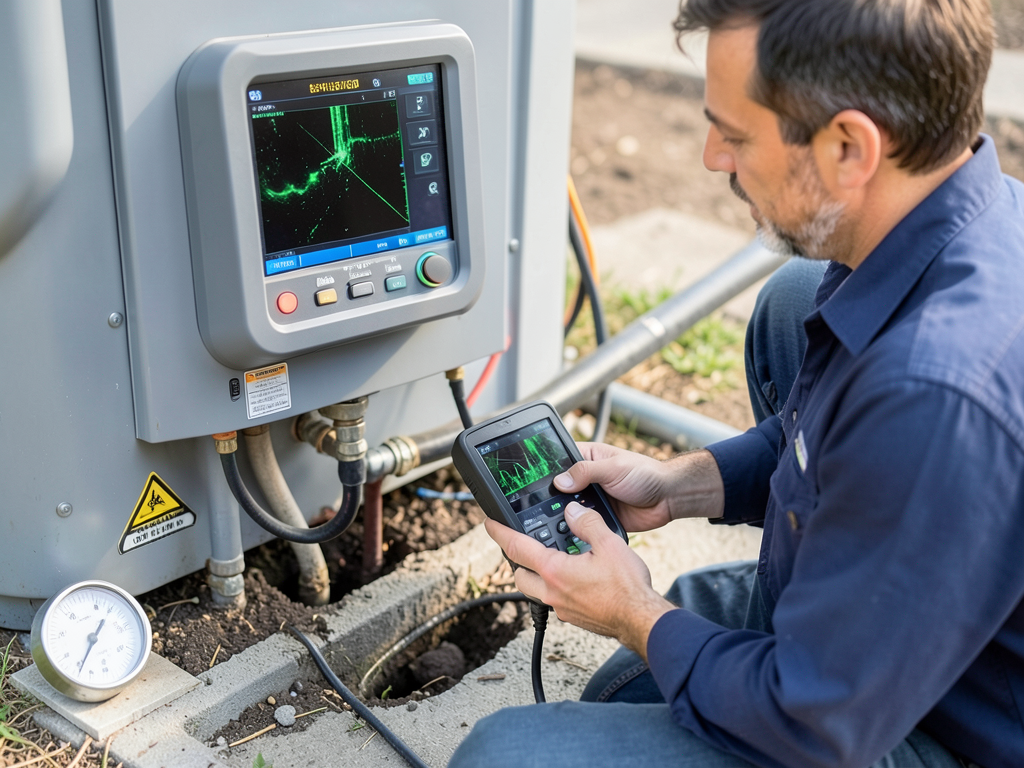
Image Description: Technician using ultrasonic leak detection equipment to locate hidden pool heater plumbing leaks behind equipment pad. Shows pressure gauge readings and thermal imaging camera display identifying temperature variations indicating water flow.
Virginia Beach Pool Heater Plumbing Code Requirements
Pool heater installations and repairs in Virginia Beach must comply with the Virginia Uniform Statewide Building Code (USBC) and specific mechanical code requirements. These regulations ensure safe operation and prevent property damage from improperly installed equipment. Keep your Chic’s Beach basement dry with a new sump pump installation.
Section 424 of the USBC covers pool and spa equipment installation requirements. All pool heater plumbing must use schedule 40 PVC piping for pressure lines and schedule 40 CPVC for hot water applications. The code mandates specific pressure ratings based on pump size and system design, with minimum working pressures of 100 PSI for most residential applications.
Backflow prevention devices are required on all pool heater supply lines. Virginia Beach enforces these requirements through the Hampton Roads Planning District Commission regulations, which mandate RPZ (Reduced Pressure Zone) assemblies or double-check valve assemblies depending on system configuration. These prevent contaminated pool water from entering the municipal supply during pressure drops.
Gas line connections for pool heaters must follow International Fuel Gas Code (IFGC) standards. Natural gas lines require minimum 3/4-inch diameter piping for heaters up to 400,000 BTU, with larger diameters needed for longer runs or higher capacity units. Propane systems have different sizing requirements based on tank distance and elevation changes.
Electrical bonding of all metal components within five feet of the pool is mandatory under NEC Article 680. This includes heater casings, plumbing, and equipment pads. Proper bonding prevents galvanic corrosion and reduces shock hazards. Virginia Beach inspectors verify bonding continuity during permit inspections.
Permits are required for all pool heater replacements and major plumbing modifications. The Virginia Beach Department of Planning issues mechanical permits that include plumbing, gas, and electrical components. Work without permits can result in fines and may void manufacturer warranties on new equipment.
Pool heater venting must comply with manufacturer specifications and local code. Gas heaters require proper flue sizing and termination height above rooflines. Vent pipes must maintain minimum clearances from combustible materials and terminate away from windows, doors, and air intakes to prevent carbon monoxide accumulation.
Diagnostic Testing for Hidden Pool Heater Leaks
Professional leak detection uses multiple testing methods to locate hidden plumbing problems without destructive investigation. Our technicians follow systematic procedures to identify leak sources quickly and accurately.
Pressure testing isolates the plumbing system from the pool and applies controlled pressure to identify leaks. We use specialized gauges to monitor pressure drops over time. A healthy system should maintain pressure within 5 PSI for 15-20 minutes. Larger drops indicate leaks in pipes, fittings, or the heater itself.
Acoustic leak detection employs sensitive microphones and amplifiers to listen for water movement through pipes. Different leak sounds have distinct frequencies – high-pitched whistles from small cracks, lower rumbles from larger openings, and clicking sounds from pressure fluctuations. Pocahontas Village’s quiet residential areas make acoustic detection particularly effective.
Thermal imaging cameras detect temperature variations caused by water flow. Active leaks show as cold spots where groundwater or pool water cools surrounding materials. This method works especially well for underground leaks and helps verify repair effectiveness by showing restored temperature patterns after fixes.
Dye testing visually confirms suspected leak locations. We introduce non-toxic dye near fittings, connections, and suspected crack areas. The dye migrates through leaks, making them visible even when water flow is minimal. This method works well for verifying heater manifold cracks and fitting failures.
Flow analysis measures water movement through the system under various conditions. We compare expected flow rates based on pump curves and pipe sizing against actual measurements. Significant discrepancies indicate restrictions or leaks affecting system performance. This testing reveals problems that pressure tests might miss.
Video inspection uses waterproof cameras to examine pipe interiors. We can identify corrosion, mineral buildup, and physical damage inside pipes up to 100 feet from access points. This technology is particularly valuable for diagnosing problems in underground runs between the pool and equipment pad.
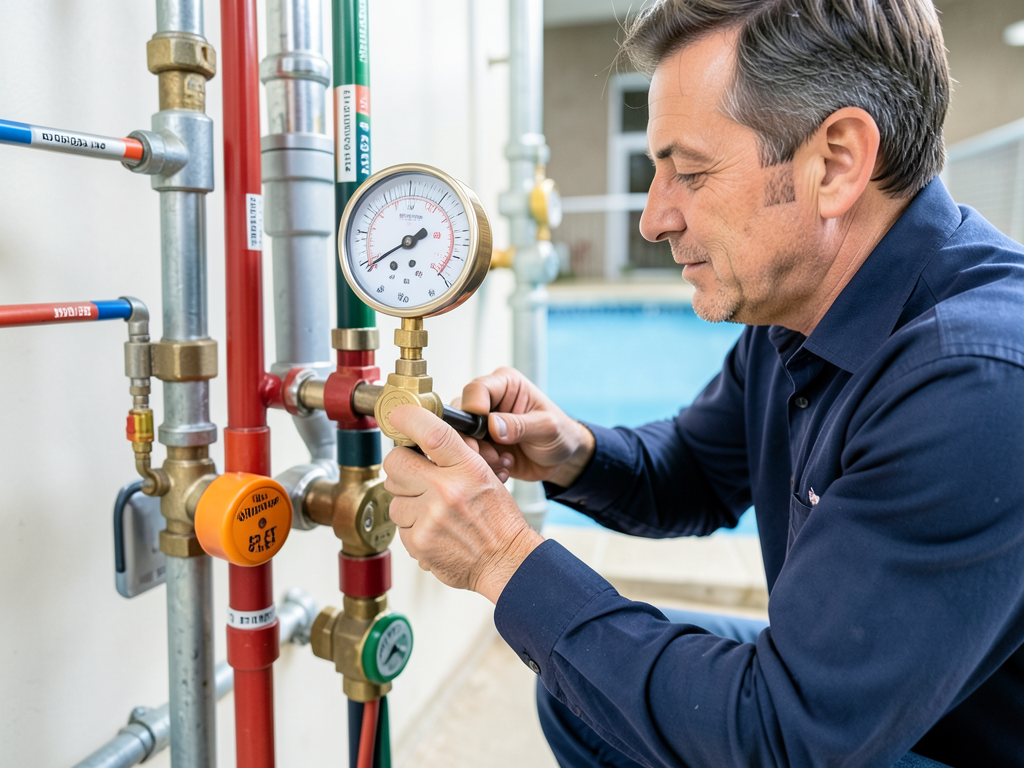
Image Description: Technician performing pressure test on pool heater plumbing system using digital pressure gauge and isolation valves. Shows pressure readings on gauge and color-coded pipe identification for systematic testing of different system sections.
Common Pool Heater Plumbing Leak Locations
Pool heater plumbing leaks occur in predictable locations based on material stress, connection types, and environmental factors. Understanding these common failure points helps focus diagnostic efforts and prevent future problems.
Heater manifold cracks represent one of the most frequent leak sources. The constant heating and cooling cycles cause metal expansion and contraction, eventually creating stress fractures. These cracks often start small but grow larger with continued use. Pocahontas Village’s temperature fluctuations between seasons accelerate this deterioration process.
Flow switch connections frequently develop leaks due to vibration and pressure changes. The flow switch monitors water movement through the heater and must maintain a water-tight seal while allowing easy removal for maintenance. Improper installation or age-related degradation of O-rings commonly causes these connections to fail.
Pipe-to-heater connections using threaded adapters are vulnerable to leaks. The different expansion rates between metal heaters and plastic pipes create stress at connection points. Over-tightening during installation can crack fittings, while under-tightening allows gradual loosening from vibration and pressure changes.
Underground pipe joints represent hidden leak sources that require excavation to repair. These occur where multiple pipe sections connect or where pipes pass through concrete equipment pads. Pocahontas Village’s sandy soil conditions can cause pipe settlement, creating stress on joints that leads to separation over time.
Check valve failures cause both leaks and system malfunctions. These valves prevent water from flowing backward through the heater when the pump shuts off. Worn seals or debris caught in the valve mechanism can cause continuous dripping or complete valve failure, affecting heater operation.
Pressure relief valve issues create both safety hazards and water waste. These valves release excess pressure to protect the heater from damage. When they stick open or fail to seat properly, they create continuous water loss that may go unnoticed for months while increasing utility costs.
Multi-port valve leaks affect water flow and can cause heater damage. These valves direct water to different pool functions and contain multiple seals that wear over time. Leaks in the valve body or handle assembly can allow water to bypass the heater entirely or create pressure imbalances.
Repair Methods for Pool Heater Plumbing Leaks
Repair approaches vary based on leak location, severity, and system configuration. We evaluate each situation to recommend the most cost-effective solution that provides lasting results.
Component replacement offers the most reliable repair for failed parts. When individual components like flow switches, pressure relief valves, or manifold sections fail, replacing them with new factory parts ensures proper operation. This approach works best for parts with known wear patterns or manufacturing defects.
Pipe repair methods include epoxy lining for small cracks and complete section replacement for extensive damage. Epoxy compounds can seal minor leaks in metal manifolds when applied correctly, but they’re not suitable for high-pressure applications or areas subject to significant movement or vibration.
Connection repair focuses on fixing the interface between different materials or components. This often involves replacing threaded adapters with union fittings that allow for thermal expansion, re-taping threaded connections with appropriate sealants, or installing flexible couplings to absorb movement between dissimilar materials.
Underground leak repair requires excavation and pipe replacement. We use minimally invasive techniques when possible, such as directional boring for straight runs or pipe bursting for replacing damaged sections without extensive trenching. The goal is to access and repair the leak while minimizing landscape disruption. What to do when you have a burst pipe in your Little Neck home.
System redesign addresses chronic leak problems caused by poor original installation or incompatible component combinations. This might involve re-plumbing entire sections, changing pipe routing to reduce stress points, or upgrading to materials better suited for the specific application and local conditions. Upgrading to a high-efficiency toilet in your Bayside rental property.
Preventive upgrades prevent future leaks by addressing known failure patterns. Installing unions instead of threaded connections, adding supports to reduce pipe movement, or incorporating isolation valves for easier maintenance can extend system life and reduce repair frequency.
Emergency leak control provides temporary solutions when immediate repair isn’t possible. This might include pipe clamps, emergency shutoff valves, or bypass configurations that allow continued pool operation while permanent repairs are scheduled. These measures prevent further damage until comprehensive repairs can be completed.
Image Description: Technician replacing corroded pool heater manifold section with new component. Shows removed damaged part, new replacement part, and proper sealing techniques using thread sealant and new gaskets for leak-free installation.
Preventative Maintenance for Pool Heater Plumbing Systems
Regular maintenance prevents most pool heater plumbing leaks and extends system life significantly. A proactive approach saves money by catching small problems before they become major repairs.
Annual system inspections identify developing problems before they cause failures. We check all visible connections, test valve operation, examine pipe supports, and look for early signs of corrosion or wear. Pocahontas Village’s coastal environment makes these inspections particularly important due to accelerated corrosion rates.
Pressure testing during routine maintenance reveals developing leaks that aren’t yet visible. By establishing baseline pressure readings, we can track system performance over time and identify gradual pressure drops that indicate emerging problems requiring attention.
Water chemistry balancing prevents corrosion-related failures. Improper pH, alkalinity, or sanitizer levels accelerate pipe and fitting deterioration. We recommend testing and adjusting water chemistry weekly during swimming season and monthly during off-season to maintain optimal conditions for all system components.
Equipment pad maintenance includes cleaning debris from around heaters, checking for proper drainage, and ensuring adequate ventilation. Accumulated leaves, dirt, and other debris trap moisture against equipment, accelerating corrosion. Proper drainage prevents standing water that can enter electrical components or freeze during cold snaps.
Winterization procedures protect systems during Virginia Beach’s occasional freezing temperatures. This includes draining water from exposed pipes, adding antifreeze to vulnerable sections, and installing freeze protection controls that activate pumps when temperatures approach freezing. These steps prevent costly freeze damage common in Pocahontas Village’s older pool systems.
Spring opening inspections catch winter damage before systems operate at full capacity. We check for cracked pipes, failed seals, and electrical problems that may have developed during the off-season. Early detection allows scheduling repairs before peak swimming season demand makes emergency service difficult to obtain.
Upgrade scheduling replaces aging components before they fail. Most pool plumbing components have predictable lifespans – PVC pipes last 15-20 years, heater manifolds 8-12 years, and valves 5-10 years depending on usage and water chemistry. Planning replacements avoids emergency repairs during peak usage periods.
Documentation of all repairs and maintenance creates a valuable history for troubleshooting future problems. Recording pressure readings, component replacement dates, and observed conditions helps identify patterns and predict when specific components might require attention, allowing for planned rather than emergency service.
Why Choose Liberty Plumbing for Pool Heater Repairs
Liberty Plumbing brings specialized expertise to pool heater plumbing repairs that general contractors cannot match. Our focus on plumbing systems means we understand the hydraulic principles and code requirements specific to pool equipment.
Our technicians hold Master Plumber licenses and complete ongoing training in pool system technology. This certification ensures we understand the complex interactions between plumbing, gas, and electrical systems in modern pool heaters. We stay current with manufacturer training for major brands like Hayward, Pentair, Jandy, and Raypak.
We provide detailed diagnostic reports with every service call. Rather than simply fixing visible problems, we identify all issues affecting your system and provide clear recommendations with priority rankings. This approach prevents the cycle of repeated service calls for related problems that incomplete repairs often create.
Our pricing structure is transparent and competitive. We provide written estimates before starting work, with no hidden fees or surprise charges. Our diagnostic fees are credited toward repairs when you choose us for the work, making professional diagnosis affordable even if you’re comparing multiple service options.
Emergency service availability means we can address critical leaks that threaten property damage or equipment failure. Our team responds quickly to urgent situations, with 24/7 availability for true emergencies. We understand that pool leaks don’t follow business hours and often require immediate attention to prevent extensive damage.
Warranty protection covers both parts and labor on our repairs. We stand behind our work with comprehensive warranties that protect your investment. Our relationships with major manufacturers also help facilitate warranty claims on new components when failures occur within warranty periods.
Local knowledge of Pocahontas Village’s specific conditions allows us to provide targeted solutions. We understand the area’s soil conditions, weather patterns, and common installation practices that affect pool system performance. This local expertise means we can anticipate problems and recommend preventive measures specific to your neighborhood.
Call (948) 207-0600 today to schedule your pool heater plumbing inspection. Don’t wait for a small leak to become a major repair. Our Pocahontas Village service area includes zip codes 23462, 23455, and surrounding neighborhoods near Lake Lawson and the Lynnhaven River corridor.
Frequently Asked Questions
How can I tell if my pool heater has a plumbing leak?
Look for water around the equipment pad, increased chemical usage, fluctuating pressure readings, or higher utility bills. Unusual noises from the heater or inconsistent water flow from return jets also indicate potential plumbing problems requiring professional diagnosis.
How much does pool heater plumbing leak repair cost?
Repair costs vary based on leak location and severity. Simple fitting replacements might cost $150-300, while manifold replacements range from $500-1,200. Underground leak repairs requiring excavation can cost $1,000-3,000 depending on accessibility and repair complexity.
How long does pool heater plumbing leak repair take?
Most repairs are completed within 2-4 hours. Emergency leaks requiring immediate attention can often be temporarily controlled within 30 minutes, with permanent repairs scheduled at your convenience. Complex underground repairs may require 1-2 days including excavation and restoration.
Can I repair pool heater plumbing leaks myself?
DIY repairs are not recommended due to the complexity of pool systems and safety requirements. Improper repairs can void warranties, create safety hazards, and lead to more expensive damage. Professional diagnosis and repair ensure code compliance and lasting results.
How often should pool heater plumbing be inspected?
We recommend annual inspections before swimming season begins. Homes in Pocahontas Village’s coastal environment should consider bi-annual inspections due to accelerated corrosion rates. Any time you notice performance changes or water around equipment requires immediate professional evaluation.
Will a pool heater plumbing leak affect my warranty?
Yes, leaks can void manufacturer warranties if they cause damage to heater components. Many manufacturers require professional installation and maintenance to maintain warranty coverage. Prompt professional repair protects both your warranty and your equipment investment.
What causes pool heater plumbing leaks in Virginia Beach?
Common causes include salt air corrosion, temperature fluctuations causing material stress, improper installation, chemical imbalances accelerating pipe deterioration, and ground movement affecting underground connections. Pocahontas Village’s specific soil and weather conditions create unique challenges for pool plumbing systems.
How can I prevent pool heater plumbing leaks?
Regular maintenance, proper water chemistry, annual inspections, and timely replacement of aging components prevent most leaks. Installing unions instead of threaded connections, ensuring proper pipe support, and winterizing systems correctly also reduce leak risks significantly.
Schedule Your Pool Heater Plumbing Inspection Today
Pool heater plumbing leaks won’t fix themselves – they only get worse over time. What starts as a small drip can quickly become a major repair requiring extensive excavation or equipment replacement. The Pocahontas Village area’s unique environmental conditions make professional diagnosis and repair essential for protecting your investment.
Liberty Plumbing’s licensed technicians understand the specific challenges facing pool systems in Virginia Beach’s coastal climate. We use advanced diagnostic equipment to locate leaks quickly without unnecessary demolition or replacement of good components. Our comprehensive approach identifies all system issues, not just the obvious ones, preventing the cycle of repeated service calls.
Don’t let a hidden pool heater plumbing leak waste water, increase your utility bills, and damage expensive equipment. Our team provides clear, upfront pricing and stands behind our work with comprehensive warranties. We service all major pool heater brands and understand the specific code requirements for Virginia Beach installations.
Call (948) 207-0600 now to schedule your inspection. Early detection saves you money and prevents the inconvenience of emergency repairs during peak swimming season. Our Pocahontas Village service area includes zip codes 23462, 23455, and surrounding neighborhoods near Lake Lawson and the Lynnhaven River corridor. Pick up the phone and call (948) 207-0600 before the next storm hits or your leak gets worse.
{
“@context”: “https://schema.org”,
“@type”: “BlogPosting”,
“headline”: “Finding and Fixing Hidden Pool Heater Plumbing Leaks in Pocahontas Village”,
“description”: “Expert pool heater plumbing leak detection and repair in Pocahontas Village, Virginia Beach. Licensed technicians diagnose and fix hidden leaks before they damage your system.”,
“wordCount”: 3343,
“datePublished”: “2026-04-17T08:26:00.000Z”,
“dateModified”: “2026-04-17T08:26:00.000Z”,
“inLanguage”: “en-US”,
“mainEntityOfPage”: {
“@type”: “WebPage”,
“@id”: “https://libertyplumbingvirginiabeach.com”
},
“publisher”: {
“@type”: “LocalBusiness”,
“name”: “Liberty Plumbing Virginia Beach”,
“url”: “https://libertyplumbingvirginiabeach.com”
},
“author”: {
“@type”: “Organization”,
“name”: “Liberty Plumbing Virginia Beach”,
“url”: “https://libertyplumbingvirginiabeach.com”
},
“image”: {
“@type”: “ImageObject”,
“url”: “https://libertyplumbingvirginiabeach.com/wp-content/uploads/2026/03/finding-and-fixing-hidden-pool-heater-plumbing-lea-1.png”
}
}
{
“@context”: “https://schema.org”,
“@type”: “Plumber”,
“name”: “Liberty Plumbing Virginia Beach”,
“url”: “https://libertyplumbingvirginiabeach.com”,
“address”: {
“@type”: “PostalAddress”,
“addressLocality”: “Virginia Beach”
},
“areaServed”: {
“@type”: “City”,
“name”: “Virginia Beach”
}
}
{
“@context”: “https://schema.org”,
“@type”: “FAQPage”,
“mainEntity”: [
{
“@type”: “Question”,
“name”: “How can I tell if my pool heater has a plumbing leak?”,
“acceptedAnswer”: {
“@type”: “Answer”,
“text”: “Look for water around the equipment pad, increased chemical usage, fluctuating pressure readings, or higher utility bills. Unusual noises from the heater or inconsistent water flow from return jets also indicate potential plumbing problems requiring professional diagnosis.”
}
},
{
“@type”: “Question”,
“name”: “How much does pool heater plumbing leak repair cost?”,
“acceptedAnswer”: {
“@type”: “Answer”,
“text”: “Repair costs vary based on leak location and severity. Simple fitting replacements might cost $150-300, while manifold replacements range from $500-1,200. Underground leak repairs requiring excavation can cost $1,000-3,000 depending on accessibility and repair complexity.”
}
},
{
“@type”: “Question”,
“name”: “How long does pool heater plumbing leak repair take?”,
“acceptedAnswer”: {
“@type”: “Answer”,
“text”: “Most repairs are completed within 2-4 hours. Emergency leaks requiring immediate attention can often be temporarily controlled within 30 minutes, with permanent repairs scheduled at your convenience. Complex underground repairs may require 1-2 days including excavation and restoration.”
}
},
{
“@type”: “Question”,
“name”: “Can I repair pool heater plumbing leaks myself?”,
“acceptedAnswer”: {
“@type”: “Answer”,
“text”: “DIY repairs are not recommended due to the complexity of pool systems and safety requirements. Improper repairs can void warranties, create safety hazards, and lead to more expensive damage. Professional diagnosis and repair ensure code compliance and lasting results.”
}
},
{
“@type”: “Question”,
“name”: “How often should pool heater plumbing be inspected?”,
“acceptedAnswer”: {
“@type”: “Answer”,
“text”: “We recommend annual inspections before swimming season begins. Homes in Pocahontas Village’s coastal environment should consider bi-annual inspections due to accelerated corrosion rates. Any time you notice performance changes or water around equipment requires immediate professional evaluation.”
}
},
{
“@type”: “Question”,
“name”: “Will a pool heater plumbing leak affect my warranty?”,
“acceptedAnswer”: {
“@type”: “Answer”,
“text”: “Yes, leaks can void manufacturer warranties if they cause damage to heater components. Many manufacturers require professional installation and maintenance to maintain warranty coverage. Prompt professional repair protects both your warranty and your equipment investment.”
}
},
{
“@type”: “Question”,
“name”: “What causes pool heater plumbing leaks in Virginia Beach?”,
“acceptedAnswer”: {
“@type”: “Answer”,
“text”: “Common causes include salt air corrosion, temperature fluctuations causing material stress, improper installation, chemical imbalances accelerating pipe deterioration, and ground movement affecting underground connections. Pocahontas Village’s specific soil and weather conditions create unique challenges for pool plumbing systems.”
}
},
{
“@type”: “Question”,
“name”: “How can I prevent pool heater plumbing leaks?”,
“acceptedAnswer”: {
“@type”: “Answer”,
“text”: “Regular maintenance, proper water chemistry, annual inspections, and timely replacement of aging components prevent most leaks. Installing unions instead of threaded connections, ensuring proper pipe support, and winterizing systems correctly also reduce leak risks significantly.”
}
}
]
}
{
“@context”: “https://schema.org”,
“@type”: “BreadcrumbList”,
“itemListElement”: [
{
“@type”: “ListItem”,
“position”: 1,
“name”: “Home”,
“item”: “https://libertyplumbingvirginiabeach.com”
},
{
“@type”: “ListItem”,
“position”: 2,
“name”: “Blog”,
“item”: “https://libertyplumbingvirginiabeach.com/blog”
},
{
“@type”: “ListItem”,
“position”: 3,
“name”: “Finding and Fixing Hidden Pool Heater Plumbing Leaks in Pocahontas Village”
}
]
}
{
“@context”: “https://schema.org”,
“@type”: “Service”,
“serviceType”: “Plumbing”,
“provider”: {
“@type”: “LocalBusiness”,
“name”: “Liberty Plumbing Virginia Beach”,
“url”: “https://libertyplumbingvirginiabeach.com”
},
“areaServed”: {
“@type”: “City”,
“name”: “Virginia Beach”
},
“description”: “Expert pool heater plumbing leak detection and repair in Pocahontas Village, Virginia Beach. Licensed technicians diagnose and fix hidden leaks before they damage your system.”
}