
How to Identify the Difference Between a Main Line Clog and a Simple Sink Backup
Water backing up in your home creates instant panic. A single slow-draining sink might need a quick fix while a main sewer line clog can flood your entire house with sewage. The key difference lies in how many fixtures are affected and where the backup occurs. This guide helps Virginia Beach homeowners diagnose the problem before calling for emergency service. Virginia Beach City Code.
Quick Diagnosis: Main Line vs. Sink Clog
Check these symptoms first. If multiple drains gurgle when you flush or run the washing machine you likely have a main line issue. A single slow sink with hair or grease buildup points to a localized clog. Floor drains backing up during normal use signals a serious main line blockage that needs immediate attention. Drain Cleaning & Rooter Service.
Virginia Beach homes face unique challenges due to sandy soil and high water tables that can shift pipes over time. Tree roots from Live Oaks and Pines common in older neighborhoods like North End often infiltrate sewer lines through small cracks. These roots grow rapidly in our humid coastal climate creating stubborn blockages.. Read more about Why Your West Neck Home Has Mysterious Cracks in the Plumbing (The Soil Problem).
Isolated Sink Clogs: The Simple Fixes
A clogged sink typically affects one fixture. You might notice slow drainage in the kitchen but the bathroom works fine. Common causes include hair soap scum and grease buildup in the P-trap under the sink. The water might drain slowly but won’t back up into other fixtures.
DIY solutions often work for isolated clogs. A plunger can clear minor blockages. A drain snake reaches deeper into the pipe to break up hair and debris. Chemical cleaners sometimes work but can damage older pipes especially in homes built before 1980 in areas like Kempsville or Great Neck. Why Great Neck residents trust our team for trenchless sewer line repairs.
Warning signs of a simple clog include water backing up only in that specific sink. The toilet and shower drain normally. You won’t hear gurgling sounds from other fixtures. The problem stays contained to one drain and doesn’t worsen over time.
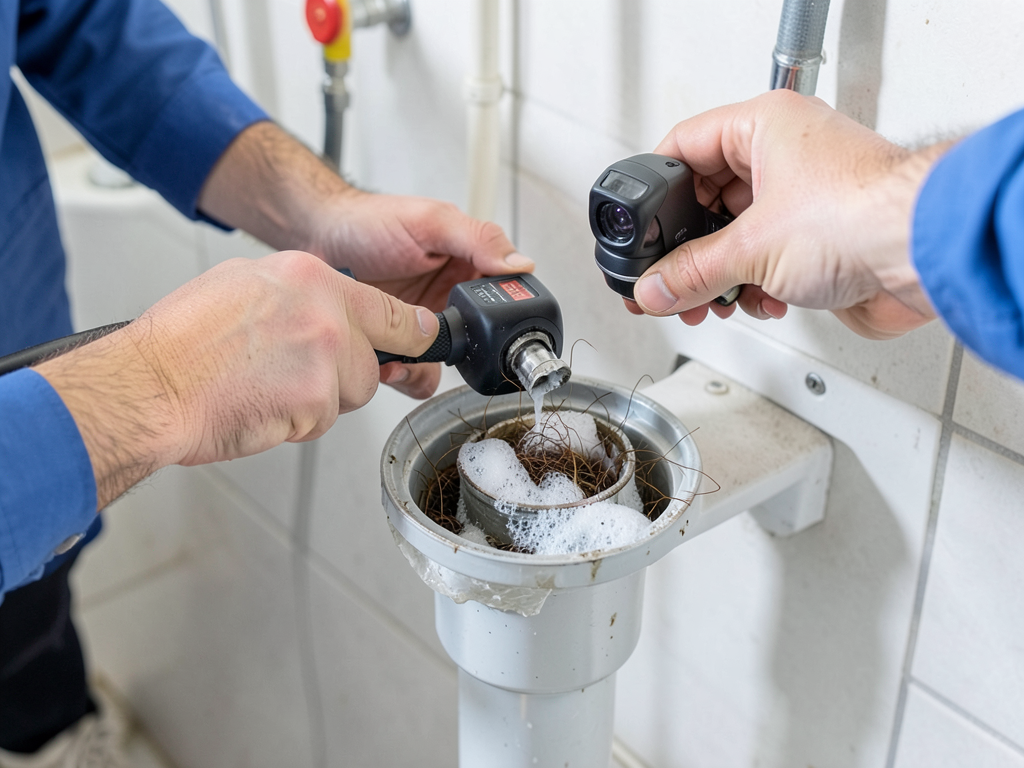
A technician uses a drain camera to inspect a P-trap showing hair and soap buildup in a single fixture
Main Sewer Line Clogs: The Full House Emergency
A main line clog affects your entire plumbing system. When you flush the toilet water might back up into the shower or floor drains. Running the washing machine could cause the kitchen sink to overflow. This happens because the main sewer lateral connects all your home’s drains to the city sewer system. Plumbing Newport News.
Multiple fixture involvement is the primary indicator. If three or more drains show problems simultaneously you’re dealing with a main line issue. Gurgling sounds from toilets when using other fixtures suggest trapped air in the system. Sewage odors inside your home indicate waste isn’t flowing properly.
Floor drains in basements or laundry rooms often show the first signs of main line trouble. These drains sit at the lowest point in your plumbing system. When the main line clogs water seeks the easiest escape route which is often through these floor drains. Commercial Plumbing Contractors.
Virginia Beach’s sandy soil contributes to main line problems. Shifting ground can crack clay or cast iron pipes common in homes built before 2000. Once cracked roots invade and create persistent blockages. The Hampton Roads Sanitation District (HRSD) reports that root intrusion causes over 60% of main line clogs in our service area. Hampton Roads Sanitation District.
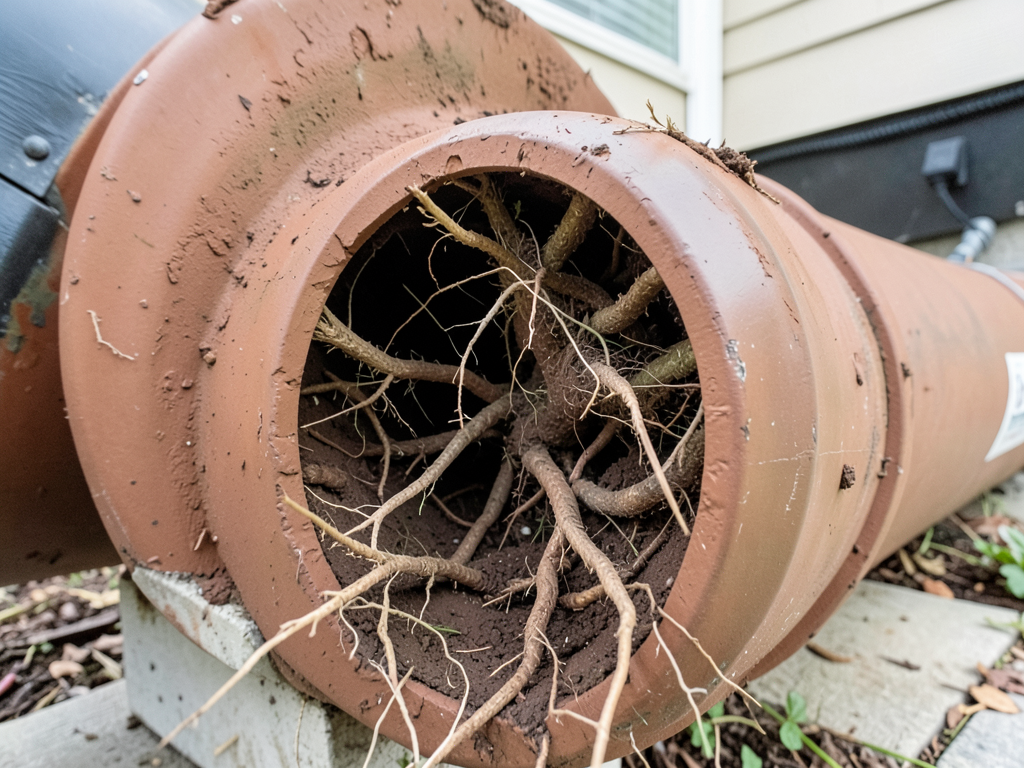
A main sewer line camera inspection reveals extensive tree root growth inside a clay pipe in a Virginia Beach home
Diagnostic Tests You Can Perform
The flush test helps identify main line issues. Flush the toilet closest to where your main line exits the house. Watch all other drains while it flushes. If water bubbles up in the shower or sinks you have a main line blockage. No reaction means the problem is likely isolated.
Check your exterior cleanout if you have one. Most Virginia Beach homes built after 1990 have a white PVC cleanout cap near the foundation. Remove the cap carefully. If sewage or water flows out or you see standing water in the pipe the main line is blocked downstream.
The washing machine test provides another clue. Run a drain cycle and watch nearby fixtures. Water backing up into the kitchen sink or shower during the wash cycle indicates a main line restriction. The washing machine pumps out large volumes of water quickly overwhelming a partially blocked main line.
Listen for gurgling sounds throughout the house. Gurgling from multiple fixtures when draining water suggests air trapped in the system. This happens when a blockage prevents proper venting through the roof stack. The sound travels through connected pipes making it easy to hear from different rooms.
A technician demonstrates how to locate and safely remove a sewer cleanout cap for inspection
Local Factors Affecting Virginia Beach Homes
Virginia Beach’s coastal environment creates unique plumbing challenges. Our high water table means pipes sit in wet soil year-round. This constant moisture accelerates corrosion in metal pipes and creates ideal conditions for root growth. Homes in Sandbridge and Pungo often have deeper main lines that are more susceptible to shifting.
Older neighborhoods like Chic’s Beach and the Oceanfront have aging infrastructure. Many homes still use original clay or cast iron sewer lines from the 1960s and 70s. These materials crack and separate at the joints over decades of ground movement and root pressure.
Recent heavy rains from hurricanes can overwhelm the municipal system. When HRSD’s capacity is exceeded sewage can back up into home systems. This isn’t always a homeowner problem but requires professional assessment to determine responsibility. The city maintains lines up to your property line. Everything beyond belongs to you.
Building codes in Virginia Beach require specific cleanout placements and pipe materials. The Virginia Uniform Statewide Building Code (USBC) Section 3005 mandates cleanouts every 100 feet and at direction changes. Homes built before these codes may lack proper cleanouts making diagnosis and repair more difficult.
Cost Comparison: DIY vs. Professional Solutions
Simple sink clogs cost $75 to $200 to clear professionally. A plumber uses a hand auger or high-pressure water jet to clear the P-trap and trap arm. This takes 30 to 60 minutes and rarely requires excavation or camera inspection.
Main line clogs range from $300 to $1,500 depending on severity. Basic snaking might clear minor blockages. Extensive root growth or collapsed pipes require hydro-jetting at $500 to $800 or camera inspection at $200 to $400. Trenchless repairs for damaged pipes cost $2,000 to $5,000.
DIY attempts on main lines often fail and cause additional damage. Chemical cleaners can corrode pipes. Improper snaking can puncture or separate pipe joints. The cost of fixing these mistakes often exceeds professional service fees.. Read more about Why You Should Never Use Chemical Drain Cleaners in Your Older Southgate Pipes.
Insurance coverage varies significantly. Most policies cover sudden main line failures but not gradual root intrusion. Document the problem with photos before any work begins. This helps with insurance claims if the issue qualifies as a covered event.
When to Call Emergency Service
Raw sewage in your home requires immediate professional help. Sewage contains harmful bacteria and creates serious health hazards. If multiple fixtures back up simultaneously or you smell sewage inside call (948) 207-0600 right away. We provide 24/7 emergency service throughout Virginia Beach and surrounding areas.
Water overflowing from floor drains during normal use indicates an active main line blockage. This won’t resolve itself and will worsen over time. Turn off your main water supply if you can’t reach a plumber immediately. This prevents additional water from entering the blocked system.
Gurgling sounds from every drain when using any fixture suggests a complete main line obstruction. The blockage will eventually cause overflow somewhere in your home. The lowest drains usually fail first but the problem will progress upward through your plumbing system.
Don’t wait for complete failure. A partial blockage today becomes a full backup tomorrow. Early intervention prevents water damage to floors walls and personal belongings. Professional diagnosis with camera inspection identifies the exact location and cause saving time and money.
Prevention and Maintenance Tips
Regular drain cleaning prevents most clogs. Professional hydro-jetting every 18 to 24 months keeps main lines clear in older homes. This removes buildup before it becomes problematic. Homes with mature trees near sewer lines benefit from annual inspections.
Watch what goes down your drains. Grease food particles and coffee grounds create stubborn blockages in kitchen sinks. Hair and soap scum accumulate in bathroom drains. Use drain strainers to catch debris before it enters your plumbing system.
Know your cleanout location and keep it accessible. During emergencies you need quick access for inspection and clearing. Mark the location clearly and ensure nothing blocks the area around it. This simple step saves valuable time when problems occur.
Consider pipe material when planning repairs or replacements. PVC resists root intrusion better than clay or cast iron. Modern materials last 50+ years versus 25 to 30 years for older options. The upfront cost difference often pays for itself through reduced maintenance needs.
Frequently Asked Questions
How can I tell if my clog is in the main line or just one fixture?
Check multiple drains. If only one sink or toilet has problems it’s likely isolated. If several fixtures gurgle or back up simultaneously the main line is blocked. The flush test helps confirm this – watch other drains when flushing one toilet.
Can I use chemical drain cleaners for main line clogs?
Chemical cleaners rarely work on main line blockages and can damage pipes especially older clay or cast iron lines. They also create hazardous conditions for plumbers who might need to work on the line later. Mechanical clearing methods are safer and more effective.
How often should I have my main sewer line inspected?
Every 18 to 24 months for homes over 20 years old or those with large trees nearby. Annual inspection is wise if you’ve had previous main line issues. Camera inspection costs $200 to $400 but prevents costly emergency repairs.
Who is responsible for repairing the main sewer line?
The city maintains sewer lines up to your property line. The homeowner owns and maintains the line from the house to the property line. This includes all pipes under your yard. Check your property survey to determine where city responsibility ends.
Don’t let a plumbing emergency turn into a disaster. If you’re experiencing multiple drain backups or sewage odors call (948) 207-0600 for immediate professional service. Our licensed technicians provide fast diagnosis and effective solutions for Virginia Beach homes. We’re available 24/7 to protect your property and restore your plumbing system.
For more information about preventing basement flooding read our guide on sump pump installation in Chic’s Beach. If you’re dealing with hard water issues from your well system learn about water treatment solutions for Pungo properties.
You may also find this helpful. Thinking About a Septic to City Sewer Conversion in the Blackwater Area?.
{
“@context”: “https://schema.org”,
“@type”: “BlogPosting”,
“headline”: “How to Identify the Difference Between a Main Line Clog and a Simple Sink Backup”,
“description”: “Learn to tell if your plumbing issue is a minor sink clog or a major main line backup. Virginia Beach homeowners need this guide to prevent costly damage.”,
“wordCount”: 1820,
“datePublished”: “2026-05-25T11:54:00.000Z”,
“dateModified”: “2026-05-25T11:54:00.000Z”,
“inLanguage”: “en-US”,
“mainEntityOfPage”: {
“@type”: “WebPage”,
“@id”: “https://libertyplumbingvirginiabeach.com”
},
“publisher”: {
“@type”: “LocalBusiness”,
“name”: “Liberty Plumbing Virginia Beach”,
“url”: “https://libertyplumbingvirginiabeach.com”
},
“author”: {
“@type”: “Organization”,
“name”: “Liberty Plumbing Virginia Beach”,
“url”: “https://libertyplumbingvirginiabeach.com”
},
“image”: {
“@type”: “ImageObject”,
“url”: “https://libertyplumbingvirginiabeach.com/wp-content/uploads/2026/03/how-to-identify-the-difference-between-a-main-line-1.png”
}
}
{
“@context”: “https://schema.org”,
“@type”: “Plumber”,
“name”: “Liberty Plumbing Virginia Beach”,
“url”: “https://libertyplumbingvirginiabeach.com”,
“address”: {
“@type”: “PostalAddress”,
“addressLocality”: “Virginia Beach”
},
“areaServed”: {
“@type”: “City”,
“name”: “Virginia Beach”
}
}
{
“@context”: “https://schema.org”,
“@type”: “FAQPage”,
“mainEntity”: [
{
“@type”: “Question”,
“name”: “How can I tell if my clog is in the main line or just one fixture?”,
“acceptedAnswer”: {
“@type”: “Answer”,
“text”: “Check multiple drains. If only one sink or toilet has problems it’s likely isolated. If several fixtures gurgle or back up simultaneously the main line is blocked. The flush test helps confirm this – watch other drains when flushing one toilet.”
}
},
{
“@type”: “Question”,
“name”: “Can I use chemical drain cleaners for main line clogs?”,
“acceptedAnswer”: {
“@type”: “Answer”,
“text”: “Chemical cleaners rarely work on main line blockages and can damage pipes especially older clay or cast iron lines. They also create hazardous conditions for plumbers who might need to work on the line later. Mechanical clearing methods are safer and more effective.”
}
},
{
“@type”: “Question”,
“name”: “How often should I have my main sewer line inspected?”,
“acceptedAnswer”: {
“@type”: “Answer”,
“text”: “Every 18 to 24 months for homes over 20 years old or those with large trees nearby. Annual inspection is wise if you’ve had previous main line issues. Camera inspection costs $200 to $400 but prevents costly emergency repairs.”
}
},
{
“@type”: “Question”,
“name”: “Who is responsible for repairing the main sewer line?”,
“acceptedAnswer”: {
“@type”: “Answer”,
“text”: “The city maintains sewer lines up to your property line. The homeowner owns and maintains the line from the house to the property line. This includes all pipes under your yard. Check your property survey to determine where city responsibility ends.”
}
}
]
}
{
“@context”: “https://schema.org”,
“@type”: “BreadcrumbList”,
“itemListElement”: [
{
“@type”: “ListItem”,
“position”: 1,
“name”: “Home”,
“item”: “https://libertyplumbingvirginiabeach.com”
},
{
“@type”: “ListItem”,
“position”: 2,
“name”: “Blog”,
“item”: “https://libertyplumbingvirginiabeach.com/blog”
},
{
“@type”: “ListItem”,
“position”: 3,
“name”: “How to Identify the Difference Between a Main Line Clog and a Simple Sink Backup”
}
]
}
{
“@context”: “https://schema.org”,
“@type”: “Service”,
“serviceType”: “Plumbing”,
“provider”: {
“@type”: “LocalBusiness”,
“name”: “Liberty Plumbing Virginia Beach”,
“url”: “https://libertyplumbingvirginiabeach.com”
},
“areaServed”: {
“@type”: “City”,
“name”: “Virginia Beach”
},
“description”: “Learn to tell if your plumbing issue is a minor sink clog or a major main line backup. Virginia Beach homeowners need this guide to prevent costly damage.”
}