
Why Tree Roots Love the Mature Sewer Lines in Aragona Village
Tree roots in Aragona Village are searching for moisture and nutrients, and your sewer line provides both in abundance. The mature trees common in this established Virginia Beach neighborhood create a perfect storm for root intrusion into aging clay pipes. If you hear gurgling from your drains or notice slow flushing toilets, you may already have a root problem that requires immediate attention before it causes a sewage backup. Virginia Cooperative Extension tree recommendations.
Understanding the Root Intrusion Problem
Tree roots naturally seek out moisture sources, and your sewer line provides exactly what they need. In Aragona Village, where many homes were built in the 1960s and 1970s, the original clay pipes are now reaching their breaking point. These pipes were installed before modern trenchless technology existed, and their joints create tiny entry points that tree roots exploit.
The problem is particularly severe in this neighborhood because of the combination of mature tree canopies and sandy soil conditions. Sandy soil allows roots to grow faster and penetrate deeper, while the high water table in Virginia Beach keeps roots actively seeking additional moisture sources year-round. Keep your Chic’s Beach basement dry with a new sump pump installation.
Common Tree Species Causing Problems in Aragona Village
Several tree species common to Aragona Village are notorious for aggressive root systems that invade sewer lines. Live oaks, which line many of the neighborhood streets, have extensive lateral root systems that can spread up to three times the height of the tree. These roots are particularly adept at finding and exploiting the smallest cracks in clay pipe joints.
Silver maples and willow trees, though less common in newer plantings, are still found in many established yards. These species have especially aggressive roots that can grow up to several feet per year under optimal conditions. Pine trees, also prevalent in the area, send out long taproots that can pierce through pipe walls once they find a weak point.
The Virginia Department of Forestry recommends keeping trees at least 10 feet away from any underground utility lines, but many Aragona Village properties were landscaped decades before this guideline existed. The result is a perfect storm where mature trees are now directly above or adjacent to aging sewer infrastructure.
Symptoms of Tree Root Intrusion
Identifying root intrusion early can save you thousands in repair costs. The first sign is usually slow draining in multiple fixtures throughout your home. Unlike a simple clog that affects one drain, root intrusion typically impacts your main sewer line, causing problems with toilets, sinks, and tubs simultaneously. Drain Cleaning & Rooter Service.
Gurgling sounds from your toilets or drains indicate air is being trapped by the root blockage. You might also notice sewage odors around your yard, particularly near where your sewer line exits the house. These odors occur when roots create enough blockage to cause sewer gases to back up through your plumbing system. Plumbing Newport News.
Another telltale sign is unusually lush or green patches of grass in your yard. Tree roots will grow toward your sewer line, but they’ll also benefit from the nutrients in wastewater that seeps through small cracks. If one section of your lawn looks significantly healthier than the rest, it could indicate a break in your sewer line that’s feeding the surrounding vegetation. Hard water solutions for Pungo properties using well water.
According to the International Plumbing Code Section 701.2, all sewer lines must maintain proper flow to prevent backups and contamination. When roots block this flow, you’re not just dealing with inconvenience—you’re facing a serious health hazard that requires immediate professional attention. Commercial Plumbing Contractors.
The Diagnostic Process: Sewer Camera Inspection
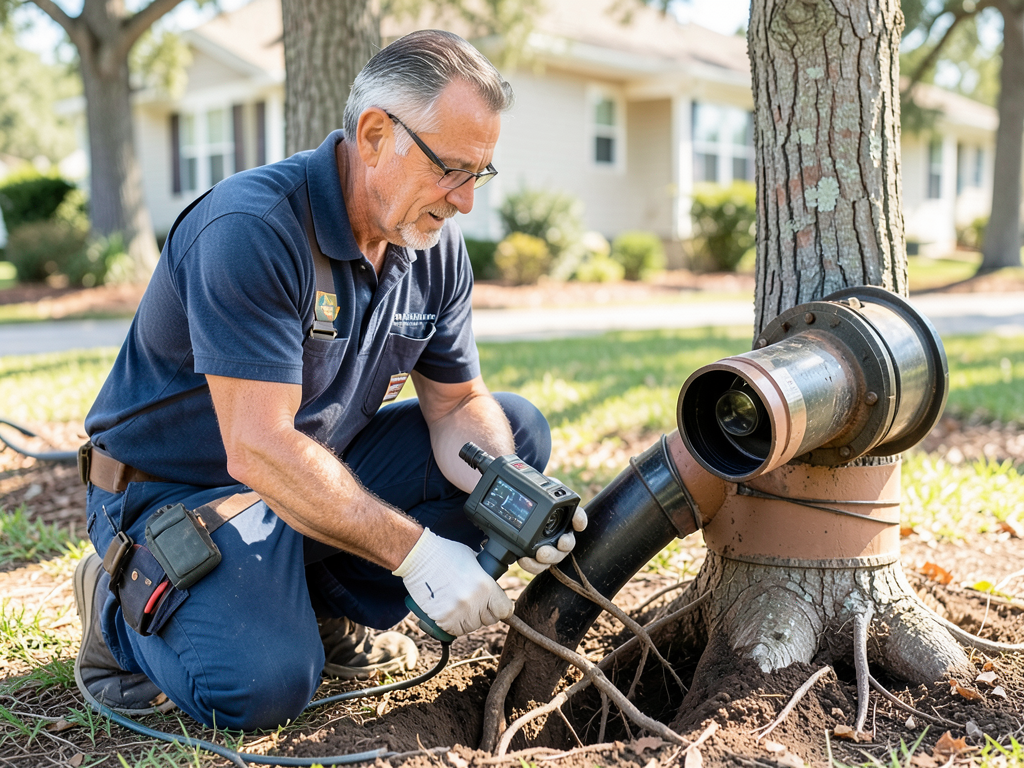
When you suspect root intrusion, the only way to confirm it is through a professional sewer camera inspection. This process involves inserting a waterproof camera attached to a flexible cable into your sewer line. The camera transmits real-time video to a monitor, allowing technicians to see exactly what’s happening inside your pipes.
During the inspection, you’ll see roots appearing as dark, fibrous masses growing into the pipe from joints or cracks. The camera can also identify the severity of the blockage, the pipe material, and any additional damage that may require repair. This diagnostic step is crucial because it prevents unnecessary excavation and helps determine the most cost-effective solution.. Read more about How to Identify the Difference Between a Main Line Clog and a Simple Sink Backup.
The inspection process typically takes 30-60 minutes and costs between $250-400 in the Virginia Beach area. However, many plumbing companies, including Liberty Plumbing, offer this service free with certain repair packages. The camera can navigate pipes from 2 to 36 inches in diameter and can identify issues up to 200 feet from the access point.. Read more about Plumbing Maintenance Tips for Historic Homes Near the Cavalier Hotel.
Modern sewer cameras use LED lighting and high-resolution imaging to detect even minor intrusions. They can also measure pipe dimensions, locate exact problem areas using radio transmitters, and record the inspection for your records or insurance claims.
Treatment Options for Root Intrusion
Once roots are confirmed, you have several treatment options depending on the severity of the intrusion. For minor root growth, hydro jetting can be highly effective. This process uses high-pressure water, typically 3,000-4,000 PSI, to blast roots and debris out of your pipes. The water pressure is strong enough to cut through roots while being safe for your plumbing system.
Mechanical snaking is another option for less severe blockages. A rotating auger head cuts through roots and pulls them back through the pipe. While effective for immediate relief, snaking doesn’t prevent future growth and may need to be repeated every 12-18 months.
For severe cases where roots have completely blocked the pipe or caused structural damage, trenchless pipe lining might be necessary. This process involves inserting a flexible, resin-coated tube into your existing pipe. The tube is inflated and cured in place, creating a new, seamless pipe within your old one. This method preserves your landscaping and typically costs 30-50% less than traditional excavation.
Chemical treatments using copper sulfate or foaming root killers can prevent regrowth after mechanical removal. These products are introduced into your sewer line where they kill existing roots and create a barrier that discourages new growth. However, they’re not effective for severe blockages and work best as a preventative measure after initial root removal.
Cost Factors for Root Removal in Virginia Beach
The cost of addressing tree root intrusion varies significantly based on several factors. The length of your sewer line affects the total price, with most residential lines ranging from 50 to 100 feet. The severity of the root intrusion also impacts cost, as severe blockages requiring multiple treatment methods will be more expensive than simple hydro jetting.
Accessibility plays a major role in pricing. If your main cleanout is easily accessible, the job will be less expensive than if technicians need to remove toilets or access pipes through other means. The pipe material also matters, as clay pipes often require more extensive repairs than PVC or ABS pipes.
In the Virginia Beach area, basic root removal through hydro jetting typically costs $400-800. More comprehensive services including camera inspection, root removal, and preventative treatment range from $800-1,500. Trenchless pipe lining for severely damaged pipes can cost $3,000-7,000 but often comes with 10-25 year warranties.
Many homeowners’ insurance policies don’t cover root damage because it’s considered a maintenance issue rather than sudden damage. However, some policies may cover the cost if roots cause a sewage backup that damages your home’s interior. It’s worth checking your policy details or speaking with your insurance provider.
Preventative Measures for Aragona Village Homeowners
Prevention is always less expensive than repair when it comes to tree roots and sewer lines. One effective strategy is installing root barriers when planting new trees. These barriers, made of plastic or metal, direct root growth downward and away from your sewer line. They should be installed at least 2-3 feet deep and extend above the soil surface.
Choosing the right trees for your landscape can also prevent future problems. The Virginia Cooperative Extension recommends slow-growing, less aggressive species for areas near utility lines. Dogwoods, redbuds, and Japanese maples have less invasive root systems compared to the species that commonly cause problems in Aragona Village.
Regular maintenance is crucial for preventing severe root intrusion. Annual sewer line inspections can catch problems before they become emergencies. Many plumbing companies offer maintenance plans that include annual camera inspections and preventative root treatments for $150-300 per year.
Proper watering practices can also reduce the likelihood of roots seeking your sewer line for moisture. Deep, infrequent watering encourages trees to develop deeper root systems rather than surface roots that might invade your pipes. The Virginia Beach Extension Office recommends watering trees deeply once or twice per week rather than daily light watering.
Local Regulations and Responsibilities
In Virginia Beach, the responsibility for sewer line maintenance falls on the property owner, not the city. The sewer lateral, which connects your home to the main sewer line in the street, is entirely your responsibility to maintain and repair. This includes the portion that runs under your yard and potentially under the city right-of-way.
The Hampton Roads Sanitation District (HRSD) oversees the regional sewer system but doesn’t maintain individual property connections. Their regulations require that all sewer laterals maintain proper flow and not allow infiltration or inflow that could overwhelm the system. Violations can result in fines or required repairs. Hampton Roads Sanitation District regulations.
Virginia Beach building codes require permits for any work on sewer lines, including root removal and pipe repair. The Virginia Uniform Statewide Building Code (VUSBC) mandates that all repairs meet current standards for materials and installation. This is why it’s crucial to work with licensed professionals who understand local requirements.
Some older neighborhoods in Virginia Beach, including parts of Aragona Village, may have combined storm and sanitary sewers. These systems are particularly vulnerable to root intrusion because they handle more water volume, creating additional moisture sources that attract roots. If your home was built before 1970, you might have this type of system.
Why Aragona Village Is Particularly Vulnerable
Aragona Village’s unique combination of factors makes it especially susceptible to tree root problems. The neighborhood’s age means most homes have original clay sewer pipes that are now 50-60 years old. Clay pipes were the standard before the 1970s, but their joints separate over time, creating perfect entry points for roots.
The neighborhood’s tree canopy has matured significantly since the homes were built. Trees that were small saplings in the 1960s are now massive specimens with extensive root systems. The combination of older infrastructure and mature trees creates a situation where root intrusion is almost inevitable without proper maintenance.
Aragona Village’s soil conditions also contribute to the problem. The sandy soil common in this part of Virginia Beach allows roots to grow faster and penetrate deeper than in clay-heavy soils. Additionally, the high water table in coastal Virginia Beach keeps roots actively growing year-round rather than going dormant in dry seasons.
The neighborhood’s layout, with homes built close together on smaller lots, means trees are often planted near property lines where sewer lines run. This proximity, combined with the mature tree canopy, creates a situation where root intrusion affects a large percentage of homes in the area.
Emergency Situations and What to Do
When tree roots completely block your sewer line, you’ll experience a true plumbing emergency. Sewage can back up into your home through toilets, sinks, and floor drains. This situation poses serious health risks from bacteria and requires immediate professional attention.
If you experience sewage backup, the first step is to stop using all water fixtures in your home. Continuing to flush toilets or run water will only make the backup worse. Next, locate your main sewer cleanout, typically a 3-4 inch pipe with a screw cap in your yard or basement. Removing this cap can sometimes relieve pressure and prevent sewage from backing up into your home.
Do not attempt to use chemical drain cleaners, as these can damage your pipes and create dangerous fumes when mixed with sewage. Also avoid using plungers, as they can force sewage back into your home through other fixtures.
Emergency root removal services in Virginia Beach typically cost $500-1,000 more than standard services due to after-hours charges and the urgency of the situation. However, the cost of not addressing a sewage backup immediately can be much higher when you factor in water damage, mold remediation, and potential health issues.
Liberty Plumbing offers 24/7 emergency service for situations like this. Our technicians arrive with the equipment needed to diagnose and address root intrusions quickly, minimizing damage to your home and property.
Long-term Solutions and Peace of Mind
For homeowners in Aragona Village dealing with recurring root problems, long-term solutions provide peace of mind and prevent future emergencies. Complete pipe replacement using modern materials like PVC or ABS eliminates the joints that allow root entry. While more expensive upfront, this solution can last 50-100 years with minimal maintenance.
Root barrier installation along your sewer line creates a physical barrier that prevents roots from reaching your pipes. These barriers must extend deep enough to block the majority of root growth and should be installed by professionals who understand root behavior and local soil conditions.
Regular maintenance contracts with local plumbing companies can catch problems early and prevent emergencies. These contracts typically include annual camera inspections, preventative root treatments, and priority service for any issues that arise. The cost of these contracts is often less than a single emergency service call.
Understanding your home’s plumbing system is also crucial for long-term peace of mind. Knowing where your cleanouts are located, having access to your home’s plumbing plans, and understanding the signs of potential problems can help you address issues before they become emergencies.
Liberty Plumbing has served the Virginia Beach area for years, including the Aragona Village neighborhood. Our technicians understand the unique challenges of this area’s older homes and mature tree canopy. We offer free estimates for sewer line inspections and can recommend the most cost-effective solution for your specific situation.
Frequently Asked Questions
How do I know if tree roots are causing my plumbing problems?
Multiple slow drains, gurgling toilets, sewage odors, and unusually green patches in your yard are common signs of root intrusion. A professional camera inspection can confirm the presence of roots in your sewer line.
Can I use chemical root killers to solve the problem myself?
Chemical treatments can help prevent root growth but won’t solve existing severe blockages. They work best as a preventative measure after professional root removal. Overuse can also damage your pipes and harm the environment.
How often should I have my sewer line inspected if I have mature trees?
Annual inspections are recommended for homes with mature trees near sewer lines. This allows you to catch problems early and prevent emergencies. Many plumbing companies offer maintenance plans that include regular inspections.
Will my homeowner’s insurance cover root damage to my sewer line?
Most policies don’t cover root damage because it’s considered a maintenance issue. However, some policies may cover damage if roots cause a sewage backup that affects your home’s interior. Check your specific policy or contact your insurance provider.
What’s the difference between hydro jetting and snaking for root removal?
Hydro jetting uses high-pressure water to blast roots out of pipes and is more effective for severe blockages. Snaking uses a rotating auger to cut through roots but may not remove all growth. Hydro jetting typically provides longer-lasting results but costs more.
How long does trenchless pipe lining last compared to traditional replacement?
Trenchless pipe lining typically comes with 10-25 year warranties and can last 50+ years with proper maintenance. Traditional PVC replacement can last 50-100 years. Both methods are effective, with trenchless being less invasive and often more cost-effective.
Should I remove trees that are causing sewer line problems?
Tree removal should be a last resort. Many problems can be solved through root barriers, regular maintenance, or pipe repairs. If you do remove trees, be aware that root systems can remain active for months or years after above-ground removal.
What trees are safe to plant near sewer lines?
Choose slow-growing, non-aggressive species like dogwoods, redbuds, Japanese maples, or certain fruit trees. The Virginia Cooperative Extension provides specific recommendations for trees with less invasive root systems suitable for planting near utilities.
{
“@context”: “https://schema.org”,
“@type”: “BlogPosting”,
“headline”: “Why Tree Roots Love the Mature Sewer Lines in Aragona Village”,
“description”: “Learn why mature trees in Aragona Village threaten your sewer lines and what to do before costly damage occurs.”,
“wordCount”: 2729,
“datePublished”: “2026-05-16T13:32:00.000Z”,
“dateModified”: “2026-05-16T13:32:00.000Z”,
“inLanguage”: “en-US”,
“mainEntityOfPage”: {
“@type”: “WebPage”,
“@id”: “https://libertyplumbingvirginiabeach.com”
},
“publisher”: {
“@type”: “LocalBusiness”,
“name”: “Liberty Plumbing Virginia Beach”,
“url”: “https://libertyplumbingvirginiabeach.com”
},
“author”: {
“@type”: “Organization”,
“name”: “Liberty Plumbing Virginia Beach”,
“url”: “https://libertyplumbingvirginiabeach.com”
},
“image”: {
“@type”: “ImageObject”,
“url”: “https://libertyplumbingvirginiabeach.com/wp-content/uploads/2026/03/why-tree-roots-love-the-mature-sewer-lines-in-arag-1.png”
}
}
{
“@context”: “https://schema.org”,
“@type”: “Plumber”,
“name”: “Liberty Plumbing Virginia Beach”,
“url”: “https://libertyplumbingvirginiabeach.com”,
“address”: {
“@type”: “PostalAddress”,
“addressLocality”: “Virginia Beach”
},
“areaServed”: {
“@type”: “City”,
“name”: “Virginia Beach”
}
}
{
“@context”: “https://schema.org”,
“@type”: “FAQPage”,
“mainEntity”: [
{
“@type”: “Question”,
“name”: “How do I know if tree roots are causing my plumbing problems?”,
“acceptedAnswer”: {
“@type”: “Answer”,
“text”: “Multiple slow drains, gurgling toilets, sewage odors, and unusually green patches in your yard are common signs of root intrusion. A professional camera inspection can confirm the presence of roots in your sewer line.”
}
},
{
“@type”: “Question”,
“name”: “Can I use chemical root killers to solve the problem myself?”,
“acceptedAnswer”: {
“@type”: “Answer”,
“text”: “Chemical treatments can help prevent root growth but won’t solve existing severe blockages. They work best as a preventative measure after professional root removal. Overuse can also damage your pipes and harm the environment.”
}
},
{
“@type”: “Question”,
“name”: “How often should I have my sewer line inspected if I have mature trees?”,
“acceptedAnswer”: {
“@type”: “Answer”,
“text”: “Annual inspections are recommended for homes with mature trees near sewer lines. This allows you to catch problems early and prevent emergencies. Many plumbing companies offer maintenance plans that include regular inspections.”
}
},
{
“@type”: “Question”,
“name”: “Will my homeowner’s insurance cover root damage to my sewer line?”,
“acceptedAnswer”: {
“@type”: “Answer”,
“text”: “Most policies don’t cover root damage because it’s considered a maintenance issue. However, some policies may cover damage if roots cause a sewage backup that affects your home’s interior. Check your specific policy or contact your insurance provider.”
}
},
{
“@type”: “Question”,
“name”: “What’s the difference between hydro jetting and snaking for root removal?”,
“acceptedAnswer”: {
“@type”: “Answer”,
“text”: “Hydro jetting uses high-pressure water to blast roots out of pipes and is more effective for severe blockages. Snaking uses a rotating auger to cut through roots but may not remove all growth. Hydro jetting typically provides longer-lasting results but costs more.”
}
},
{
“@type”: “Question”,
“name”: “How long does trenchless pipe lining last compared to traditional replacement?”,
“acceptedAnswer”: {
“@type”: “Answer”,
“text”: “Trenchless pipe lining typically comes with 10-25 year warranties and can last 50+ years with proper maintenance. Traditional PVC replacement can last 50-100 years. Both methods are effective, with trenchless being less invasive and often more cost-effective.”
}
},
{
“@type”: “Question”,
“name”: “Should I remove trees that are causing sewer line problems?”,
“acceptedAnswer”: {
“@type”: “Answer”,
“text”: “Tree removal should be a last resort. Many problems can be solved through root barriers, regular maintenance, or pipe repairs. If you do remove trees, be aware that root systems can remain active for months or years after above-ground removal.”
}
},
{
“@type”: “Question”,
“name”: “What trees are safe to plant near sewer lines?”,
“acceptedAnswer”: {
“@type”: “Answer”,
“text”: “Choose slow-growing, non-aggressive species like dogwoods, redbuds, Japanese maples, or certain fruit trees. The Virginia Cooperative Extension provides specific recommendations for trees with less invasive root systems suitable for planting near utilities.”
}
}
]
}
{
“@context”: “https://schema.org”,
“@type”: “BreadcrumbList”,
“itemListElement”: [
{
“@type”: “ListItem”,
“position”: 1,
“name”: “Home”,
“item”: “https://libertyplumbingvirginiabeach.com”
},
{
“@type”: “ListItem”,
“position”: 2,
“name”: “Blog”,
“item”: “https://libertyplumbingvirginiabeach.com/blog”
},
{
“@type”: “ListItem”,
“position”: 3,
“name”: “Why Tree Roots Love the Mature Sewer Lines in Aragona Village”
}
]
}
{
“@context”: “https://schema.org”,
“@type”: “Service”,
“serviceType”: “Plumbing”,
“provider”: {
“@type”: “LocalBusiness”,
“name”: “Liberty Plumbing Virginia Beach”,
“url”: “https://libertyplumbingvirginiabeach.com”
},
“areaServed”: {
“@type”: “City”,
“name”: “Virginia Beach”
},
“description”: “Learn why mature trees in Aragona Village threaten your sewer lines and what to do before costly damage occurs.”
}