
Why Your Rudee Inlet Boat House Needs Specialized Marine Grade Plumbing Fixtures
The salt air at Rudee Inlet eats through standard plumbing fixtures within months. The constant ocean breeze carries microscopic salt particles that settle on metal surfaces and create a corrosive environment unlike anywhere else in Virginia Beach. This is why your boat house needs specialized marine grade plumbing fixtures built with 316 stainless steel and corrosion-resistant finishes. Virginia Uniform Statewide Building Code.
Standard chrome-plated brass fixtures might look good on day one but they start pitting and corroding within the first year. The salty mist accelerates oxidation at a rate that makes traditional plumbing materials completely inadequate for waterfront properties. Marine grade fixtures use molybdenum-enhanced 316 stainless steel that resists pitting in salt spray conditions up to 1,000 hours per ASTM B117 testing standards. ASTM B117 salt spray testing standards.
The humid coastal climate also creates condensation problems that standard fixtures cannot handle. When warm ocean air meets cold water pipes, moisture forms on fixture surfaces and creates the perfect environment for corrosion to begin. Marine grade fixtures include sealed cartridges and corrosion-resistant internal components that prevent this failure pattern. Hard water solutions for Pungo properties using well water.
Call (948) 207-0600 today to schedule your inspection and protect your investment from salt-air damage.
Why Standard Fixtures Fail in Virginia Beach (The Salt Air Factor)
The ocean breeze at Rudee Inlet carries salt particles that settle on every surface within a half-mile radius. These microscopic crystals create a galvanic corrosion cell when combined with moisture from humidity or rain. Standard 304 stainless steel has about 18% chromium content which provides basic corrosion resistance but cannot handle the constant salt exposure found at Virginia Beach waterfront properties. Keep your Chic’s Beach basement dry with a new sump pump installation.
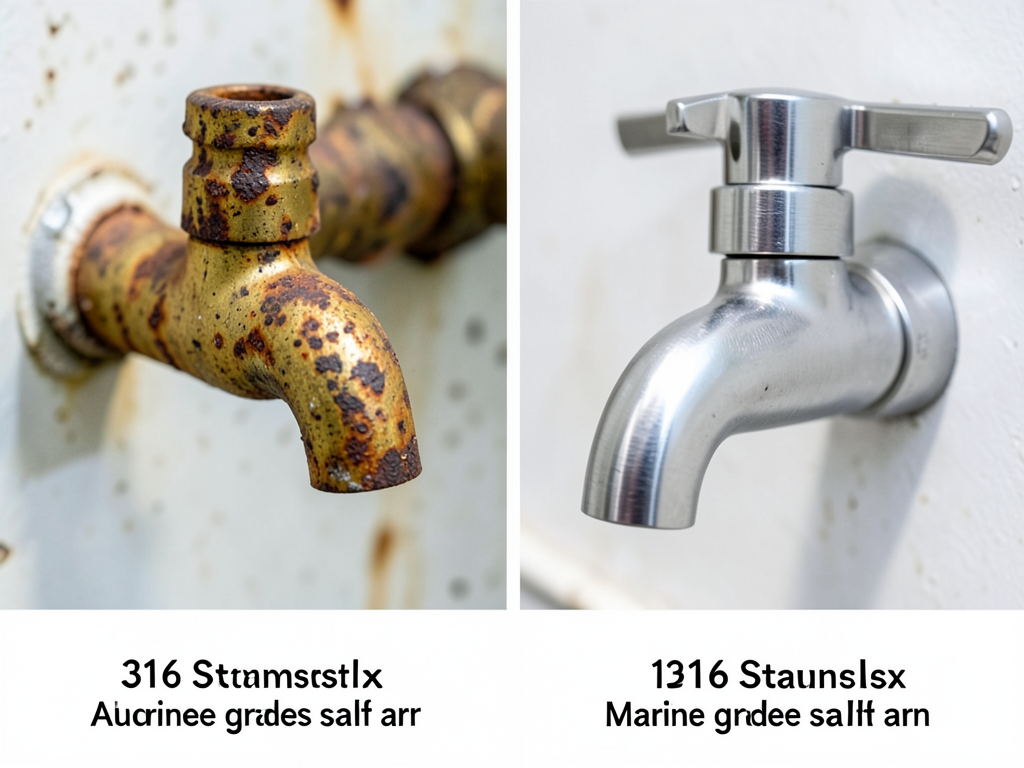
Marine grade 316 stainless steel contains 2-3% molybdenum which dramatically improves resistance to chloride-induced pitting. This is the same material used in boat hardware and offshore oil platforms because it withstands the harsh marine environment. The difference becomes obvious within 6-12 months when 304 fixtures show white corrosion spots while 316 fixtures maintain their integrity.
The Virginia Beach climate adds another layer of complexity. Summer humidity levels often exceed 80% which means surfaces never fully dry between salt spray events. This constant moisture accelerates the corrosion process exponentially compared to inland areas. The combination of salt, moisture, and temperature fluctuations creates a perfect storm for plumbing fixture failure. Plumbing Newport News.
Local building codes for Rudee Inlet properties now require marine grade materials within 1,000 feet of the shoreline. The Virginia Uniform Statewide Building Code Section 13 mandates corrosion-resistant materials for all exterior plumbing fixtures in coastal zones. This requirement protects property values and prevents the safety hazards that corroded fixtures create.
<img src="
” alt=”Corrosion comparison showing 304 stainless steel pitted after 12 months versus 316 stainless steel maintaining integrity near Rudee Inlet” />
Critical Materials: 316 Stainless Steel vs. Solid Brass
The material choice for marine grade plumbing fixtures determines whether your investment lasts 2 years or 20 years. 316 stainless steel provides superior corrosion resistance but solid brass with proper finishes can also work when manufactured to marine specifications. The key difference lies in the internal components and how manufacturers protect against dezincification.
316 stainless steel contains molybdenum which creates a passive oxide layer that self-heals when scratched. This material resists pitting corrosion that destroys standard fixtures. The chromium content forms a protective barrier against salt spray, while nickel provides structural integrity. This combination makes 316 the gold standard for marine applications.
Solid brass fixtures can work in marine environments when they include dezincification-resistant (DZR) brass alloys. Standard brass loses zinc over time when exposed to salt water, creating porous surfaces that corrode rapidly. DZR brass maintains its structural integrity but requires additional protective finishes to match 316 stainless steel performance.
Physical Vapor Deposition (PVD) finishes provide the final layer of protection for both materials. PVD creates a molecular bond with the base metal that resists scratching and corrosion better than traditional chrome plating. High-quality PVD finishes pass 1,000+ hours of salt spray testing while maintaining their appearance and preventing corrosion underneath.
The internal components matter just as much as the external finish. Marine grade fixtures use ceramic cartridges with corrosion-resistant seals and stainless steel springs instead of brass components that can fail in salt environments. These internal upgrades prevent the slow leaks that often precede catastrophic fixture failure.
| Material | Corrosion Resistance | Cost Range | Lifespan in Salt Air |
|---|---|---|---|
| 316 Stainless Steel | Excellent | $150-400 | 15-25 years |
| DZR Brass + PVD | Very Good | $120-350 | 10-15 years |
| Standard Brass | Poor | $50-150 | 2-4 years |
| 304 Stainless Steel | Fair | $80-200 | 4-7 years |
Recommended Marine Grade Applications: Dockside, Outdoor Showers, and Oceanfront Interiors
Different areas of your boat house need specific marine grade solutions based on their exposure levels. Dockside applications face the harshest conditions with constant salt spray and direct water contact. Outdoor showers need fixtures that handle both hot and cold water while resisting corrosion from soap and shampoo chemicals. Oceanfront interior bathrooms require fixtures that can handle high humidity without corroding.
Dockside hose bibbs and faucets need 316 stainless steel construction with freeze-proof designs for Virginia’s occasional cold snaps. The Virginia Beach area experiences freezing temperatures about 10-15 nights per year, which can burst standard fixtures. Marine grade dockside fixtures include freeze protection and corrosion-resistant internal components that prevent both types of failure. What to do when you have a burst pipe in your Little Neck home.
Outdoor showers at Rudee Inlet boat houses benefit from solid brass fixtures with PVD finishes. These fixtures handle the hot water temperatures people prefer for post-beach rinses while resisting the salt air exposure. The PVD finish prevents the chalky white corrosion that appears on standard chrome fixtures within months of installation.
Interior bathroom fixtures in oceanfront properties need marine grade materials even though they’re not directly exposed to salt spray. The high humidity levels create condensation that can cause standard fixtures to pit and corrode over time. 316 stainless steel or DZR brass with PVD finishes provide the durability needed for these environments.
Marine grade supply lines and shut-off valves prevent the slow leaks that often go unnoticed until major damage occurs. Standard supply lines can corrode through in as little as 18 months in salt air environments. Upgrading to marine grade supply components prevents water damage and mold growth in wall cavities. Upgrading to a high-efficiency toilet in your Bayside rental property.
Boat house kitchens need marine grade faucets that can handle both fresh water from the municipal supply and potentially brackish water from wells. The Lynnhaven River estuary creates varying salinity levels that standard fixtures cannot handle. Marine grade kitchen fixtures include ceramic cartridges and corrosion-resistant finishes that work in these mixed water conditions.
Top Marine Grade Brands for Coastal Virginia Homes
Several manufacturers specialize in marine grade plumbing fixtures that work specifically for Virginia Beach’s coastal environment. These brands invest in salt spray testing and corrosion-resistant materials that meet or exceed ASTM B117 standards. Understanding the differences helps you make informed decisions about protecting your boat house investment.
Ambassador Marine produces fixtures specifically designed for marine environments with 316 stainless steel construction and ceramic cartridges. Their products pass 1,000+ hours of salt spray testing and include features like lockable handles for security and vandal-resistant aerators. These fixtures work well for both dockside and interior applications.
Scandvik specializes in marine hardware with a focus on durability and functionality. Their faucets use 316 stainless steel and include features like removable spouts for easy cleaning and maintenance. The company tests all products in actual marine environments rather than just salt spray chambers, providing real-world validation of their durability claims.
Grohe’s coastal line includes marine grade fixtures with PVD finishes that resist both corrosion and fingerprints. While not specifically marine focused, their coastal products undergo enhanced testing for salt air resistance. The PVD finishes maintain their appearance longer than traditional chrome while providing superior corrosion protection.
Miseno offers 304 stainless steel fixtures with enhanced corrosion protection that work well for Rudee Inlet properties located slightly inland from the immediate waterfront. Their products cost less than 316 options while still providing good durability for areas with moderate salt exposure. The company uses ceramic cartridges and corrosion-resistant internal components throughout their product line.
Delta Faucet Company’s Vero line includes marine grade options with SpotShield Technology that resists water spots and fingerprints. While primarily marketed for residential use, these fixtures include corrosion-resistant finishes and ceramic components that work well in coastal Virginia environments. The company offers extended warranties on their marine grade products.
<img src="
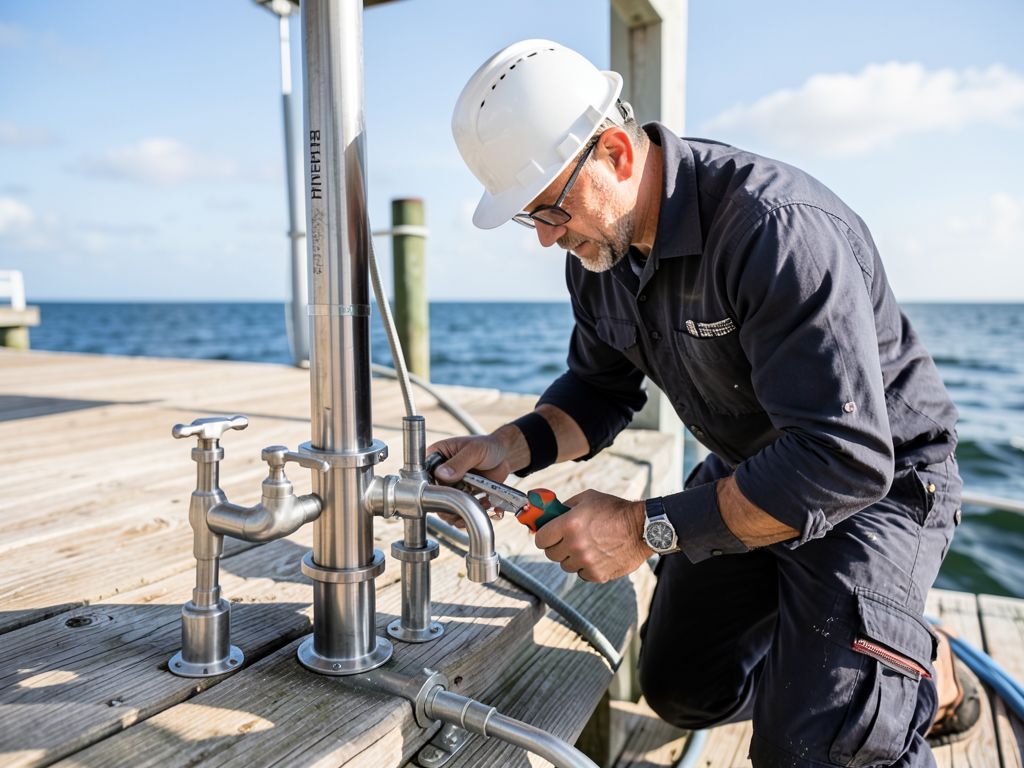
” alt=”Marine grade faucet installation showing 316 stainless steel construction and corrosion-resistant components on a Rudee Inlet boat house dock” />
Maintenance Tips to Prevent Pitting and Corrosion
Even marine grade fixtures need proper maintenance to reach their full lifespan potential. The salt air at Rudee Inlet never stops working to corrode metal surfaces, so regular maintenance prevents the slow deterioration that reduces fixture performance. A simple maintenance schedule can extend fixture life by 5-10 years compared to neglected installations.
Rinse fixtures with fresh water weekly to remove salt deposits before they can cause damage. This simple step prevents the white crusty buildup that forms on metal surfaces exposed to salt spray. Use a soft cloth and avoid abrasive cleaners that can scratch protective finishes and create entry points for corrosion.
Apply marine grade protectant every 3-4 months to create an additional barrier against salt air. These products contain waxes and polymers that fill microscopic surface imperfections and prevent salt crystals from adhering to metal surfaces. The protectant also makes future cleaning easier by preventing buildup from bonding to fixture surfaces.
Check for leaks monthly by inspecting supply lines and connections for signs of corrosion or moisture. Small leaks create perfect conditions for accelerated corrosion and can cause hidden water damage in wall cavities. Early detection prevents the costly repairs that result from long-term water exposure.
Clean aerator screens quarterly to prevent mineral buildup that can affect water flow and create pressure imbalances. Salt air combined with hard water creates scale deposits that reduce fixture efficiency. Removing and cleaning aerators maintains optimal performance and prevents the stress that can cause premature component failure.
Inspect O-rings and seals annually for signs of deterioration. The constant humidity at Rudee Inlet can cause rubber components to break down faster than in drier climates. Replacing worn seals prevents leaks and maintains the watertight integrity that protects internal fixture components from moisture damage.
Test water pressure twice yearly to ensure it stays within recommended ranges. High water pressure stresses fixture components and can cause premature failure of even marine grade products. Installing a pressure regulator protects both fixtures and the plumbing system from damage caused by excessive pressure.
Professional Installation of Marine Plumbing in VB
Marine grade fixtures require specific installation techniques that differ from standard plumbing. The corrosive environment at Rudee Inlet means every connection point needs extra protection against galvanic corrosion. Professional installation ensures these critical details are handled correctly, preventing the failures that often occur with DIY installations.
Dielectric unions prevent galvanic corrosion between dissimilar metals in marine environments. When connecting copper supply lines to stainless steel fixtures, these unions create an electrical barrier that prevents the electrochemical reaction that causes corrosion. Professional plumbers understand when and where to use these components to maximize system longevity.
Proper sealing of all exterior connections prevents moisture intrusion that can cause hidden corrosion. Marine grade sealants designed for saltwater environments provide superior protection compared to standard plumbing compounds. These specialized products maintain their flexibility and adhesion even when constantly exposed to salt air and moisture.
Support and anchoring methods for marine grade fixtures need to account for the additional weight and different mounting requirements of stainless steel products. The installation must prevent movement that can stress connections and create leak points. Professional installation includes proper backing and support that DIY methods often overlook.
Testing procedures for marine installations verify that all connections are watertight and properly sealed. This testing includes pressure checks and visual inspections that identify potential failure points before they cause damage. Professional plumbers use specialized tools to detect even small leaks that could become major problems in corrosive environments.
Permits and code compliance for marine grade installations in Rudee Inlet require specific knowledge of local requirements. The Virginia Beach building department has particular standards for coastal properties that go beyond standard plumbing codes. Professional installation ensures all permits are obtained and inspections passed without costly delays or rework.
Warranty registration and documentation provide protection against manufacturing defects and installation errors. Professional plumbers handle this paperwork and often provide additional workmanship warranties that cover installation-related issues. This documentation becomes valuable if problems arise during the fixture’s service life.
Call (948) 207-0600 today to schedule your marine grade plumbing installation and protect your Rudee Inlet boat house from salt-air corrosion.
Frequently Asked Questions
How long do marine grade plumbing fixtures last at Rudee Inlet?
Quality marine grade fixtures with 316 stainless steel construction typically last 15-25 years at Rudee Inlet when properly maintained. The salt air environment accelerates corrosion compared to inland areas, but marine grade materials resist this damage effectively. Regular maintenance can extend fixture life by 5-10 years beyond the typical lifespan.
Are marine grade fixtures worth the extra cost?
Yes, marine grade fixtures provide significant long-term savings compared to replacing standard fixtures every 2-4 years. A $300 marine grade faucet that lasts 20 years costs $15 per year while a $100 standard fixture that needs replacement every 3 years costs $33 per year. The marine grade option also prevents water damage from fixture failures.
Can I install marine grade fixtures myself?
While possible, professional installation is recommended for marine grade fixtures at Rudee Inlet. The corrosive environment requires specific techniques and materials that differ from standard plumbing. Professional installation ensures proper sealing, corrosion protection, and code compliance that DIY methods often miss, preventing costly failures and water damage.
What’s the difference between 304 and 316 stainless steel for coastal plumbing?
316 stainless steel contains 2-3% molybdenum which provides superior resistance to chloride-induced pitting compared to 304 stainless steel. In salt air environments like Rudee Inlet, 316 fixtures maintain their integrity for 15-25 years while 304 fixtures typically show significant corrosion within 4-7 years. The molybdenum creates a self-healing passive layer that resists salt damage.
Do I need special permits for marine grade plumbing at Rudee Inlet?
Yes, Rudee Inlet properties require permits for plumbing modifications that comply with Virginia Beach coastal building codes. These codes mandate corrosion-resistant materials within specific distances from the shoreline. Professional plumbers handle permit requirements and ensure installations meet all local standards for coastal properties.
How often should I maintain marine grade plumbing fixtures?
Marine grade fixtures need monthly visual inspections and quarterly cleaning with fresh water to remove salt deposits. Apply marine grade protectant every 3-4 months and check for leaks monthly. Annual professional inspections can identify potential issues before they cause damage, extending fixture life and preventing costly repairs.
Will marine grade fixtures rust in Virginia Beach?
High-quality marine grade fixtures with 316 stainless steel and PVD finishes resist rust effectively in Virginia Beach’s salt air environment. You might see surface discoloration over decades, but the fixtures won’t pit, corrode through, or fail structurally like standard fixtures. The protective layers prevent the oxidation that causes rust in standard materials.
What brands make the best marine grade plumbing fixtures?
Ambassador Marine, Scandvik, and Grohe’s coastal line produce the most reliable marine grade fixtures for Virginia Beach conditions. These brands invest in salt spray testing and use 316 stainless steel or DZR brass with PVD finishes. Their products pass 1,000+ hours of ASTM B117 testing and include warranties specific to coastal environments.
How much do marine grade plumbing fixtures cost?
Marine grade fixtures cost 2-4 times more than standard fixtures but provide 5-10 times the lifespan in coastal environments. A quality marine grade faucet costs $150-400 compared to $50-150 for standard fixtures. Installation costs are similar, making the lifetime cost significantly lower when factoring replacement frequency and potential water damage prevention.
Can I use marine grade fixtures inland to prevent corrosion?
Yes, marine grade fixtures work well in any environment where corrosion resistance is valuable. They’re excellent for pool houses, outdoor kitchens, and properties near brackish water or industrial areas with air pollution. The enhanced durability and extended lifespan make them worthwhile investments even outside coastal zones.
What maintenance products work best for marine grade fixtures?
Marine grade protectants containing waxes and polymers work best for maintaining fixture finishes. Avoid abrasive cleaners that can scratch protective layers. Use fresh water for weekly rinsing and mild soap solutions for deeper cleaning. Specialized marine care products designed for boat hardware also work well on plumbing fixtures in salt air environments.
How do I know if my current fixtures need replacement?
Signs that standard fixtures need replacement include white corrosion spots, pitting on metal surfaces, reduced water flow from clogged aerators, and visible leaks at connection points. If your fixtures are over 5 years old and show any of these symptoms, they’re likely failing due to salt air exposure and should be upgraded to marine grade materials.
{
“@context”: “https://schema.org”,
“@type”: “BlogPosting”,
“headline”: “Why Your Rudee Inlet Boat House Needs Specialized Marine Grade Plumbing Fixtures”,
“description”: “Protect your Rudee Inlet boat house from salt-air corrosion with marine grade plumbing fixtures. Learn why 316 stainless steel and PVD finishes are essential for coastal Virginia durability.”,
“wordCount”: 2878,
“datePublished”: “2026-05-06T07:49:00.000Z”,
“dateModified”: “2026-05-06T07:49:00.000Z”,
“inLanguage”: “en-US”,
“mainEntityOfPage”: {
“@type”: “WebPage”,
“@id”: “https://libertyplumbingvirginiabeach.com”
},
“publisher”: {
“@type”: “LocalBusiness”,
“name”: “Liberty Plumbing Virginia Beach”,
“url”: “https://libertyplumbingvirginiabeach.com”
},
“author”: {
“@type”: “Organization”,
“name”: “Liberty Plumbing Virginia Beach”,
“url”: “https://libertyplumbingvirginiabeach.com”
},
“image”: {
“@type”: “ImageObject”,
“url”: “https://libertyplumbingvirginiabeach.com/wp-content/uploads/2026/03/why-your-rudee-inlet-boat-house-needs-specialized-1.png”
}
}
{
“@context”: “https://schema.org”,
“@type”: “Plumber”,
“name”: “Liberty Plumbing Virginia Beach”,
“url”: “https://libertyplumbingvirginiabeach.com”,
“address”: {
“@type”: “PostalAddress”,
“addressLocality”: “Virginia Beach”
},
“areaServed”: {
“@type”: “City”,
“name”: “Virginia Beach”
}
}
{
“@context”: “https://schema.org”,
“@type”: “FAQPage”,
“mainEntity”: [
{
“@type”: “Question”,
“name”: “How long do marine grade plumbing fixtures last at Rudee Inlet?”,
“acceptedAnswer”: {
“@type”: “Answer”,
“text”: “Quality marine grade fixtures with 316 stainless steel construction typically last 15-25 years at Rudee Inlet when properly maintained. The salt air environment accelerates corrosion compared to inland areas, but marine grade materials resist this damage effectively. Regular maintenance can extend fixture life by 5-10 years beyond the typical lifespan.”
}
},
{
“@type”: “Question”,
“name”: “Are marine grade fixtures worth the extra cost?”,
“acceptedAnswer”: {
“@type”: “Answer”,
“text”: “Yes, marine grade fixtures provide significant long-term savings compared to replacing standard fixtures every 2-4 years. A $300 marine grade faucet that lasts 20 years costs $15 per year while a $100 standard fixture that needs replacement every 3 years costs $33 per year. The marine grade option also prevents water damage from fixture failures.”
}
},
{
“@type”: “Question”,
“name”: “Can I install marine grade fixtures myself?”,
“acceptedAnswer”: {
“@type”: “Answer”,
“text”: “While possible, professional installation is recommended for marine grade fixtures at Rudee Inlet. The corrosive environment requires specific techniques and materials that differ from standard plumbing. Professional installation ensures proper sealing, corrosion protection, and code compliance that DIY methods often miss, preventing costly failures and water damage.”
}
},
{
“@type”: “Question”,
“name”: “What’s the difference between 304 and 316 stainless steel for coastal plumbing?”,
“acceptedAnswer”: {
“@type”: “Answer”,
“text”: “316 stainless steel contains 2-3% molybdenum which provides superior resistance to chloride-induced pitting compared to 304 stainless steel. In salt air environments like Rudee Inlet, 316 fixtures maintain their integrity for 15-25 years while 304 fixtures typically show significant corrosion within 4-7 years. The molybdenum creates a self-healing passive layer that resists salt damage.”
}
},
{
“@type”: “Question”,
“name”: “Do I need special permits for marine grade plumbing at Rudee Inlet?”,
“acceptedAnswer”: {
“@type”: “Answer”,
“text”: “Yes, Rudee Inlet properties require permits for plumbing modifications that comply with Virginia Beach coastal building codes. These codes mandate corrosion-resistant materials within specific distances from the shoreline. Professional plumbers handle permit requirements and ensure installations meet all local standards for coastal properties.”
}
},
{
“@type”: “Question”,
“name”: “How often should I maintain marine grade plumbing fixtures?”,
“acceptedAnswer”: {
“@type”: “Answer”,
“text”: “Marine grade fixtures need monthly visual inspections and quarterly cleaning with fresh water to remove salt deposits. Apply marine grade protectant every 3-4 months and check for leaks monthly. Annual professional inspections can identify potential issues before they cause damage, extending fixture life and preventing costly repairs.”
}
},
{
“@type”: “Question”,
“name”: “Will marine grade fixtures rust in Virginia Beach?”,
“acceptedAnswer”: {
“@type”: “Answer”,
“text”: “High-quality marine grade fixtures with 316 stainless steel and PVD finishes resist rust effectively in Virginia Beach’s salt air environment. You might see surface discoloration over decades, but the fixtures won’t pit, corrode through, or fail structurally like standard fixtures. The protective layers prevent the oxidation that causes rust in standard materials.”
}
},
{
“@type”: “Question”,
“name”: “What brands make the best marine grade plumbing fixtures?”,
“acceptedAnswer”: {
“@type”: “Answer”,
“text”: “Ambassador Marine, Scandvik, and Grohe’s coastal line produce the most reliable marine grade fixtures for Virginia Beach conditions. These brands invest in salt spray testing and use 316 stainless steel or DZR brass with PVD finishes. Their products pass 1,000+ hours of ASTM B117 testing and include warranties specific to coastal environments.”
}
},
{
“@type”: “Question”,
“name”: “How much do marine grade plumbing fixtures cost?”,
“acceptedAnswer”: {
“@type”: “Answer”,
“text”: “Marine grade fixtures cost 2-4 times more than standard fixtures but provide 5-10 times the lifespan in coastal environments. A quality marine grade faucet costs $150-400 compared to $50-150 for standard fixtures. Installation costs are similar, making the lifetime cost significantly lower when factoring replacement frequency and potential water damage prevention.”
}
},
{
“@type”: “Question”,
“name”: “Can I use marine grade fixtures inland to prevent corrosion?”,
“acceptedAnswer”: {
“@type”: “Answer”,
“text”: “Yes, marine grade fixtures work well in any environment where corrosion resistance is valuable. They’re excellent for pool houses, outdoor kitchens, and properties near brackish water or industrial areas with air pollution. The enhanced durability and extended lifespan make them worthwhile investments even outside coastal zones.”
}
},
{
“@type”: “Question”,
“name”: “What maintenance products work best for marine grade fixtures?”,
“acceptedAnswer”: {
“@type”: “Answer”,
“text”: “Marine grade protectants containing waxes and polymers work best for maintaining fixture finishes. Avoid abrasive cleaners that can scratch protective layers. Use fresh water for weekly rinsing and mild soap solutions for deeper cleaning. Specialized marine care products designed for boat hardware also work well on plumbing fixtures in salt air environments.”
}
},
{
“@type”: “Question”,
“name”: “How do I know if my current fixtures need replacement?”,
“acceptedAnswer”: {
“@type”: “Answer”,
“text”: “Signs that standard fixtures need replacement include white corrosion spots, pitting on metal surfaces, reduced water flow from clogged aerators, and visible leaks at connection points. If your fixtures are over 5 years old and show any of these symptoms, they’re likely failing due to salt air exposure and should be upgraded to marine grade materials.”
}
}
]
}
{
“@context”: “https://schema.org”,
“@type”: “BreadcrumbList”,
“itemListElement”: [
{
“@type”: “ListItem”,
“position”: 1,
“name”: “Home”,
“item”: “https://libertyplumbingvirginiabeach.com”
},
{
“@type”: “ListItem”,
“position”: 2,
“name”: “Blog”,
“item”: “https://libertyplumbingvirginiabeach.com/blog”
},
{
“@type”: “ListItem”,
“position”: 3,
“name”: “Why Your Rudee Inlet Boat House Needs Specialized Marine Grade Plumbing Fixtures”
}
]
}
{
“@context”: “https://schema.org”,
“@type”: “Service”,
“serviceType”: “Plumbing”,
“provider”: {
“@type”: “LocalBusiness”,
“name”: “Liberty Plumbing Virginia Beach”,
“url”: “https://libertyplumbingvirginiabeach.com”
},
“areaServed”: {
“@type”: “City”,
“name”: “Virginia Beach”
},
“description”: “Protect your Rudee Inlet boat house from salt-air corrosion with marine grade plumbing fixtures. Learn why 316 stainless steel and PVD finishes are essential for coastal Virginia durability.”
}